West Ibiza · Sant Josep
Sant Agustí des Vedrà, Ibiza: map, church and the coast nearby
A spread-out parish on the Puig des Vedrà in western Sant Josep, with an unusual north-facing church, a wine-growing history and some of the west coast's best-known coves close by.
Updated 13 September 2026
- Municipality
- Sant Josep de sa Talaia
- Church
- Built 1786, finished early 1800s
- Altitude
- 117 m
- From Sant Antoni
- About 4.5 km, straight line
Sant Agustí des Vedrà (San Agustín in Spanish) occupies the western part of the municipality of Sant Josep de sa Talaia. It is a parish rather than a tight village: a church, a handful of services and a great many scattered houses spreading over the hills between Sant Antoni and the coast. The altitude is about 117 m, and the village stands on the Puig des Vedrà, a low hill with wide views.
The church that faces north
The church is the one monument most people stop for. It was built in 1786 but not completed until the early 19th century, and it began as a simple rectangular building. In 1850 two chapels were added, which gave it the cross shape it has now.
Two details make it unusual. It is described as the only church on the island that is oriented to the north, and its facade was designed to face the houses of two local families, who both claimed the land it stands on. The compromise is built into the stone.
Between Sant Antoni and the sea
The village is about 4.5 km south of the bay of Sant Antoni in a straight line, and some 12 km from Ibiza Town. That puts it close to the west coast without being on it, and it is one of the places where the island's rural and coastal sides meet.
The beaches within reach are among the most visited on Ibiza:
- Platges de Comte, better known as Cala Comte
- Cala Bassa
- Port des Torrent
- Cala de Bou and the small beaches on the bay of Sant Antoni
Cova de sa Llenya, a narrow cave on the coast of Dellà Torrent, is 25 to 30 m deep.
An old defensive tower
Within the same parish stands the Torre d'en Rovira, also called the Torre de Comte, an 18th-century coastal watchtower on the headland between Cala Comte and Cala Bassa. It is the most substantial monument in the area apart from the church.
Wine and farming
The parish has a record of wine production, and its hills are still farming country behind the coast. Away from the beach roads, the lanes are quiet, and the off season is the easiest time to drive them.
Size and growth
The village entity counts about 13,000 residents in 2025, a large figure for what looks like a rural area. The count covers the whole parish, houses spread across the countryside included. In 1991 it was fewer than 2,700, so most of the growth is recent.
Getting there
Sant Agustí lies on the road system between Sant Antoni and Sant Josep, and buses serve the area, though the routes and numbers change from year to year. For current information, the Consell d'Eivissa's public transport pages are the place to look. A car or bicycle makes the beaches and the tower easy to link on one day. The Sant Josep map shows the municipality as a whole, and the Sant Antoni bay page covers the coast to the north.
What to expect
The centre is modest. The church stands among a small cluster of buildings, and the real interest lies in what surrounds them: the hills, the farmland and the short drives to the sea. Visitors who stay nearby tend to use the parish as a base, driving down to the coast in the morning and returning inland in the evening.
For the other villages of the municipality, the Sant Josep map is the starting point.
Questions people ask
Is Sant Agustí the same as San Agustín?
Yes. Sant Agustí des Vedrà is the Catalan name and San Agustín the Spanish form. The village is in the municipality of Sant Josep de sa Talaia, in the west of the island, not far from Sant Antoni.
Is Sant Agustí near the islet of Es Vedrà?
Not especially. The islet of Es Vedrà lies off the south-west coast, roughly 11 km from the village in a straight line. The village stands on a hill called Puig des Vedrà, so the shared name can mislead, and the islet is a separate destination.
What is unusual about the church of Sant Agustí?
It is described as the only church on the island that faces north. It was begun in 1786, enlarged with two chapels in 1850, and the facade was built to face the houses of two families who both claimed the land.
Which beaches are near Sant Agustí?
Several of the west coast's best-known stretches are a short drive away, among them Platges de Comte, Cala Bassa, Port des Torrent and Cala de Bou. Each has its own page on this guide.
Sources Viquipèdia – Sant Agustí des Vedrà · Torre de Comte (o d'en Rovira) – Sant Josep · OpenStreetMap – Sant Agustí des Vedrà
Nearby on the map
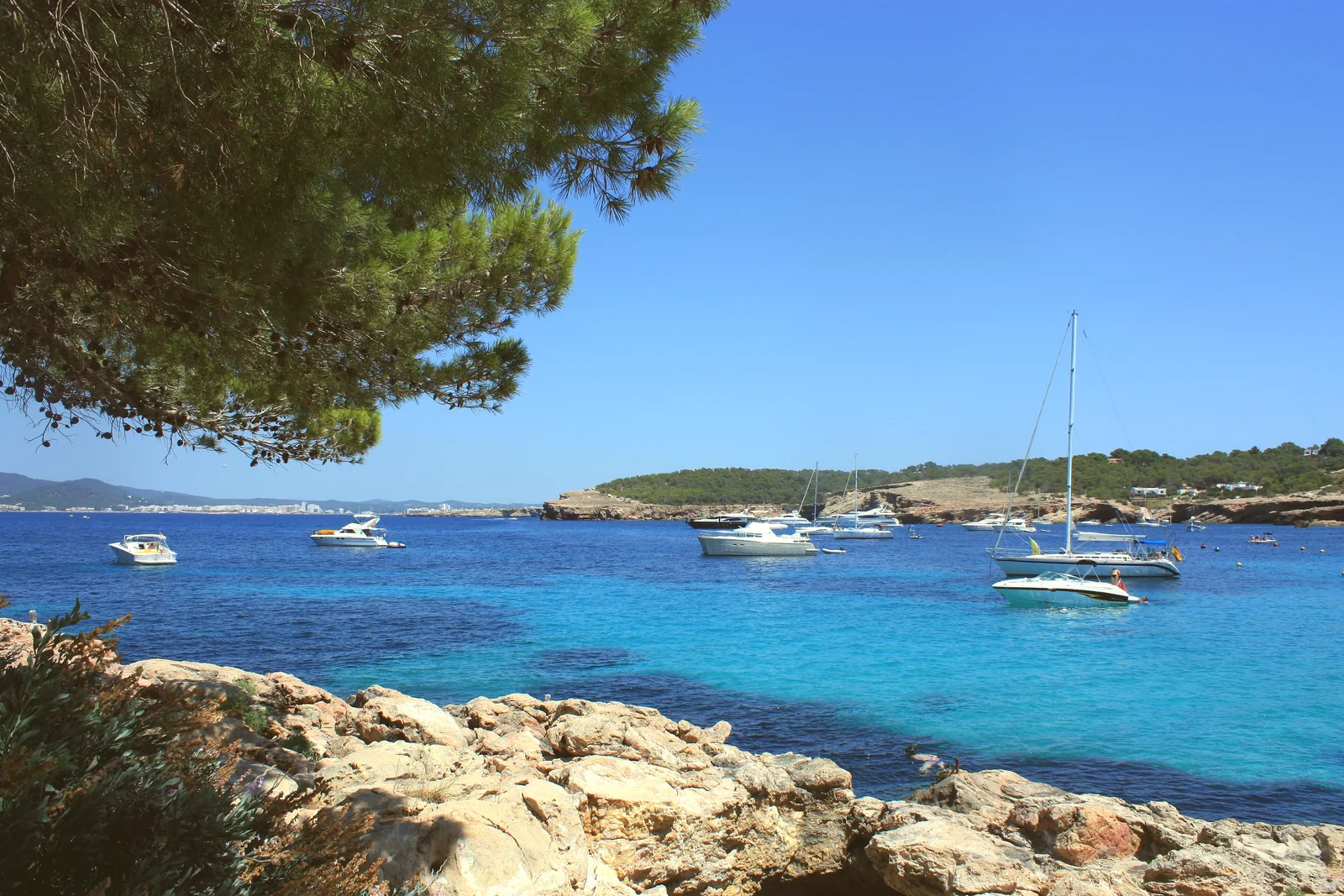
Cala Bassa beach, Ibiza: pine shade, shallow water and the way in
A wide golden cove facing north, with junipers and pines to the sand's edge, a gently shelving seabed and a bus stop…
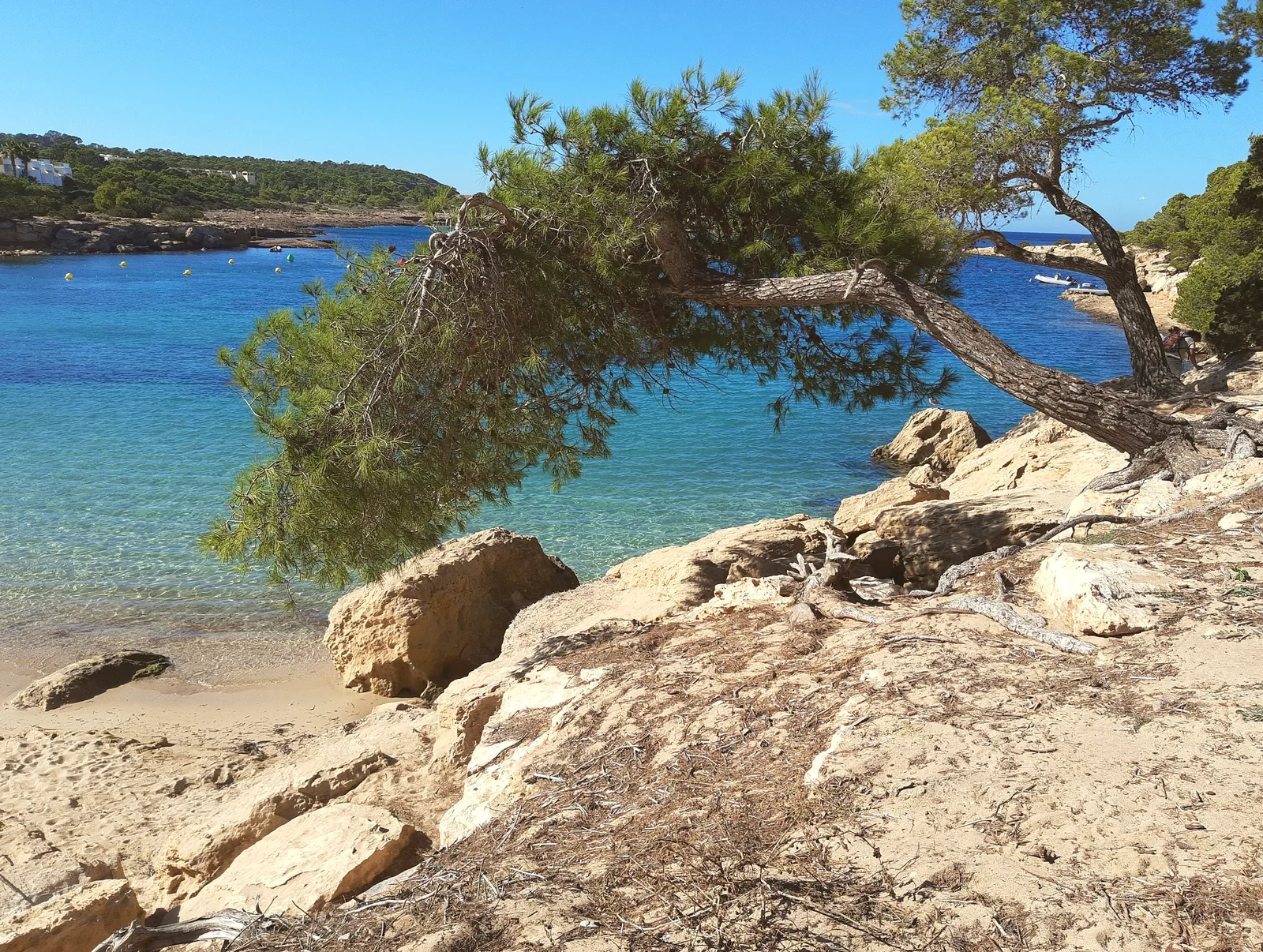
Port des Torrent beach, Ibiza: map, access and the swimming lane
A deep, sheltered cove of fine golden sand at the far end of the road along the Bay of Sant Antoni, ringed by pines…
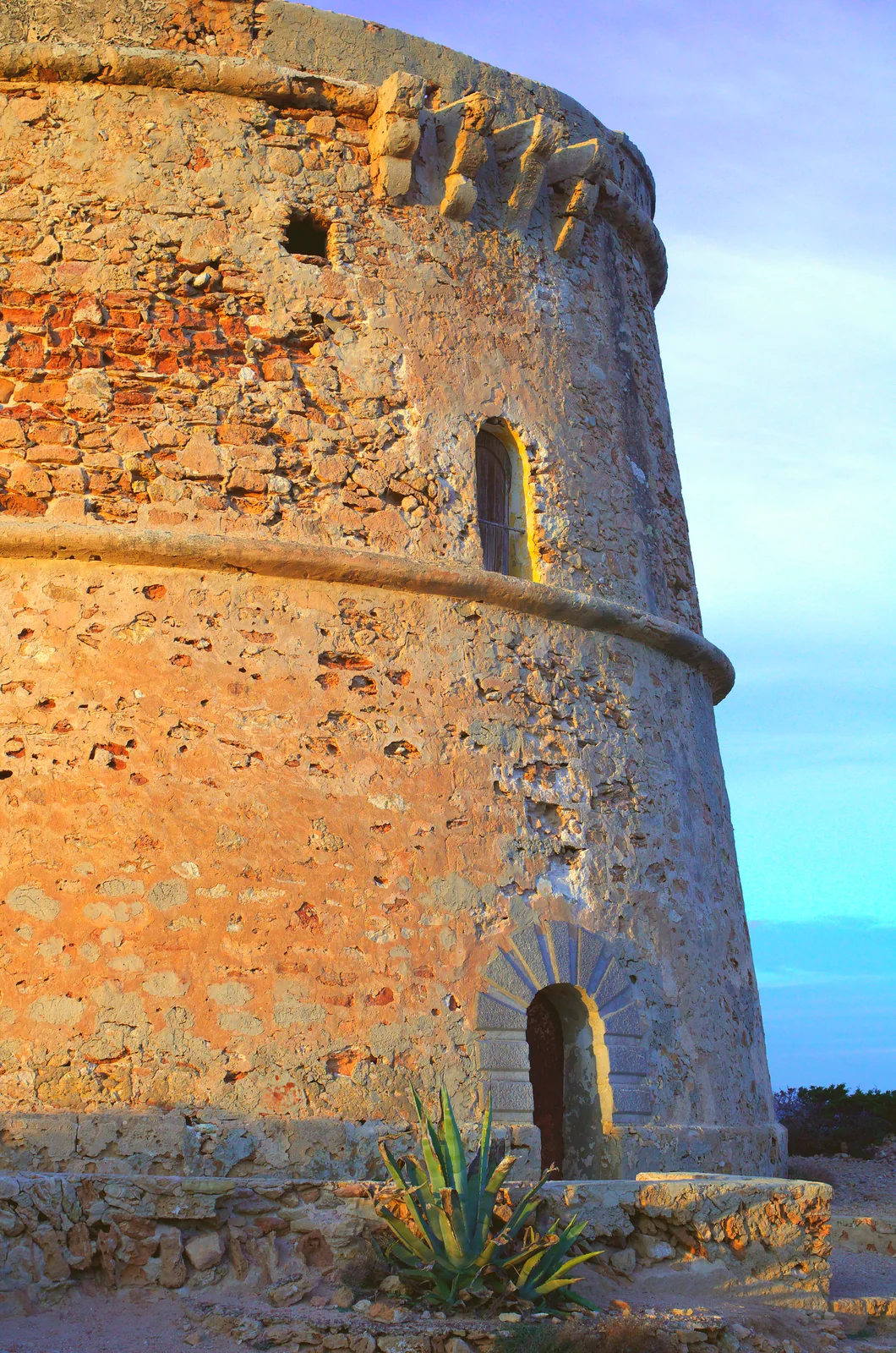
Torre d'en Rovira, Cala Comte: Ibiza's 1763 watchtower
A large round defensive tower of 1763 on the headland between Cala Comte and Cala Bassa, built to watch the west coast…