Island-wide · Climate
Ibiza weather by month: temperature, sunshine and the sea
Hot dry summers, a warm sea until November and mild winters. The long-term averages for Ibiza, month by month, and what they mean for beaches, walking and quiet weeks.
Updated 1 September 2026
- Hottest month
- August, highs near 30 °C
- Sunniest month
- July, about 340 hours
- Warmest sea
- August, about 26 °C
- Wettest months
- September to November
Ibiza has a Mediterranean climate with hot, dry summers and mild winters, and the weather on the island is one of the most reliable in Europe from late May to early October. The figures below are long-term averages for Eivissa airport, the island's reference weather station, taken from the climate table that Wikipedia publishes from the Spanish national weather agency AEMET (averages for 1991–2010). Sea temperatures come from the same page, which draws them from NOAA and other sea-temperature sources. Averages describe a typical month, not a forecast, so any single week can differ.
Ibiza weather by month
| Month | Average high | Average low | Sunshine (hours) | Days with rain (1 mm or more) | Sea temperature |
|---|---|---|---|---|---|
| January | 15.8 °C | 7.9 °C | 164 | 5.0 | 14.7 °C |
| February | 16.0 °C | 7.9 °C | 172 | 4.4 | 14.3 °C |
| March | 17.8 °C | 9.5 °C | 217 | 3.5 | 14.5 °C |
| April | 20.0 °C | 11.6 °C | 243 | 4.0 | 16.3 °C |
| May | 23.1 °C | 14.5 °C | 282 | 2.6 | 19.1 °C |
| June | 27.1 °C | 18.5 °C | 315 | 1.2 | 22.5 °C |
| July | 29.8 °C | 21.5 °C | 338 | 0.3 | 25.1 °C |
| August | 30.4 °C | 22.4 °C | 307 | 1.7 | 26.2 °C |
| September | 27.7 °C | 19.7 °C | 237 | 4.4 | 25.2 °C |
| October | 24.0 °C | 16.3 °C | 205 | 5.8 | 22.7 °C |
| November | 19.5 °C | 11.9 °C | 165 | 5.9 | 19.6 °C |
| December | 16.8 °C | 9.0 °C | 155 | 5.5 | 16.6 °C |
Over a year that adds up to roughly 2,800 hours of sunshine and about 400 mm of rain, most of it in the autumn months. The air temperature peaks in August, but the sea peaks slightly later in the season than the air: September is warmer in the water than June is.
Summer: June to September
July is the sunniest and driest month, with more than 330 hours of sunshine and almost no rain at all. August is the hottest, with highs a little above 30 °C and nights that stay above 22 °C, and the sea at its warmest. These are the months of the busiest beaches, the longest queues for parking at coves such as Cala Comte and the fullest buses.
June and September are the quieter summer. June has already passed 22 °C in the water and brings the longest days; September has the warmest sea of the year apart from August. For swimming with more space, the second half of September is hard to beat.
Spring and autumn
May is the month when the island turns from walking weather to beach weather: highs of about 23 °C, 280 hours of sunshine and a sea of 19 °C, which is cool for the less hardy but fine for a short swim. April is pleasant for the coast paths and the villages, and the sunset on the west coast is already well worth the trip.
October is the warm autumn: highs of 24 °C and a sea still above 22 °C, but with the first heavy rain. Autumn rain in Ibiza tends to come in short, strong storms rather than weeks of drizzle, and the days between them are often clear. By November the sea has dropped below 20 °C and many beach businesses close for the winter.
Winter: December to March
Winter is mild. Highs sit between 16 and 18 °C, nights drop to around 8 °C, and the island sees close to 160 to 220 hours of sunshine a month. It is not a beach season, since the sea is around 14 to 15 °C, but sunny days on a terrace or a coast path are common. Many seasonal hotels, clubs and restaurants close for the winter, and the bus and ferry timetables are reduced; the transport guide explains how.
Sea temperature and swimming
The sea lags behind the air. It is coolest in February, at about 14 °C, and does not pass 20 °C until some time in June. Swimmers who find 19 °C too fresh will be comfortable from mid-June, and the water stays above 22 °C until the end of October on average. A thin wetsuit extends the season for snorkelling at the rocky coves in May and November.
Sun, heat and wind
Midday heat in July and August makes a beach without shade hard work, and the sun is strong even in May and September, so shade, water and a hat matter more than the thermometer suggests. Coastal breezes cool the shore in the afternoon. In winter and spring the wind from the north can make the north-facing coves feel cold even on a sunny day, and a calm bay on one coast may be rough on the other, which is one reason to check the orientation of a beach on its own page before setting out.
Choosing the month
For swimming and the full beach experience, July to mid-September. For beaches with room to spare, early June and late September. For walking, cycling and quiet villages, April, May and October, when the temperature is comfortable all day. For a quiet winter week with a few clear days, February and March, with a jacket for the evenings. The beaches guide and the activities page suit each season differently.
Questions people ask
When is the best time to visit Ibiza for the beach?
June to September. The sea passes 22 °C in June and peaks around 26 °C in August, and rain is rare from June to August. Early June and the second half of September give the same sea temperatures with fewer people on the beaches.
Is Ibiza too cold in winter?
It is mild rather than cold: daytime highs of 16 to 17 °C between December and February and lows near 8 °C. Sea swimming is for the hardy, but walking, cycling and lunch outdoors on a sunny day are all realistic.
When does it rain in Ibiza?
Mostly in autumn. September to November bring the heaviest averages, often as short, strong storms, while July is almost dry. Spring has some wet days, and winter months average four to five days with measurable rain. A rainy spell in any month is possible, but long wet periods are unusual.
How warm is the sea in Ibiza in October?
Around 22 to 23 °C on average, which is still comfortable for swimming and about the same as the sea in June. October also brings the first heavy autumn rain, so the sea is warm but the weather less settled than in summer. It cools quickly through November.
Sources AEMET – Spain's State Meteorological Agency (climate normals) · Wikipedia – Ibiza, climate (AEMET data for Eivissa airport, 1991–2010)
Nearby on the map
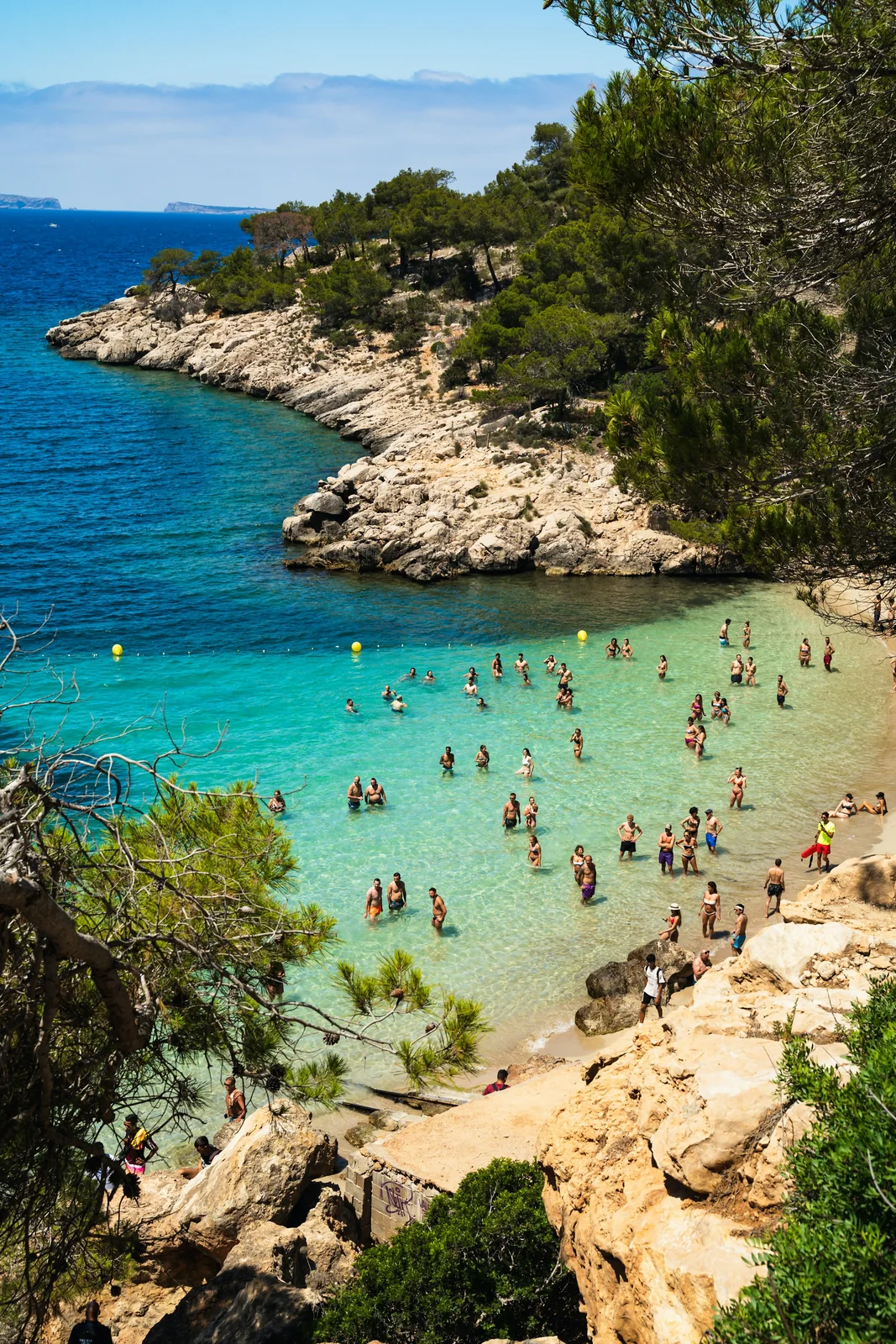
Ibiza beach map: every cala on the island and how to get there
More than twenty beaches and coves on one map, sorted into west, south, east and north coast, with the kind of shore,…
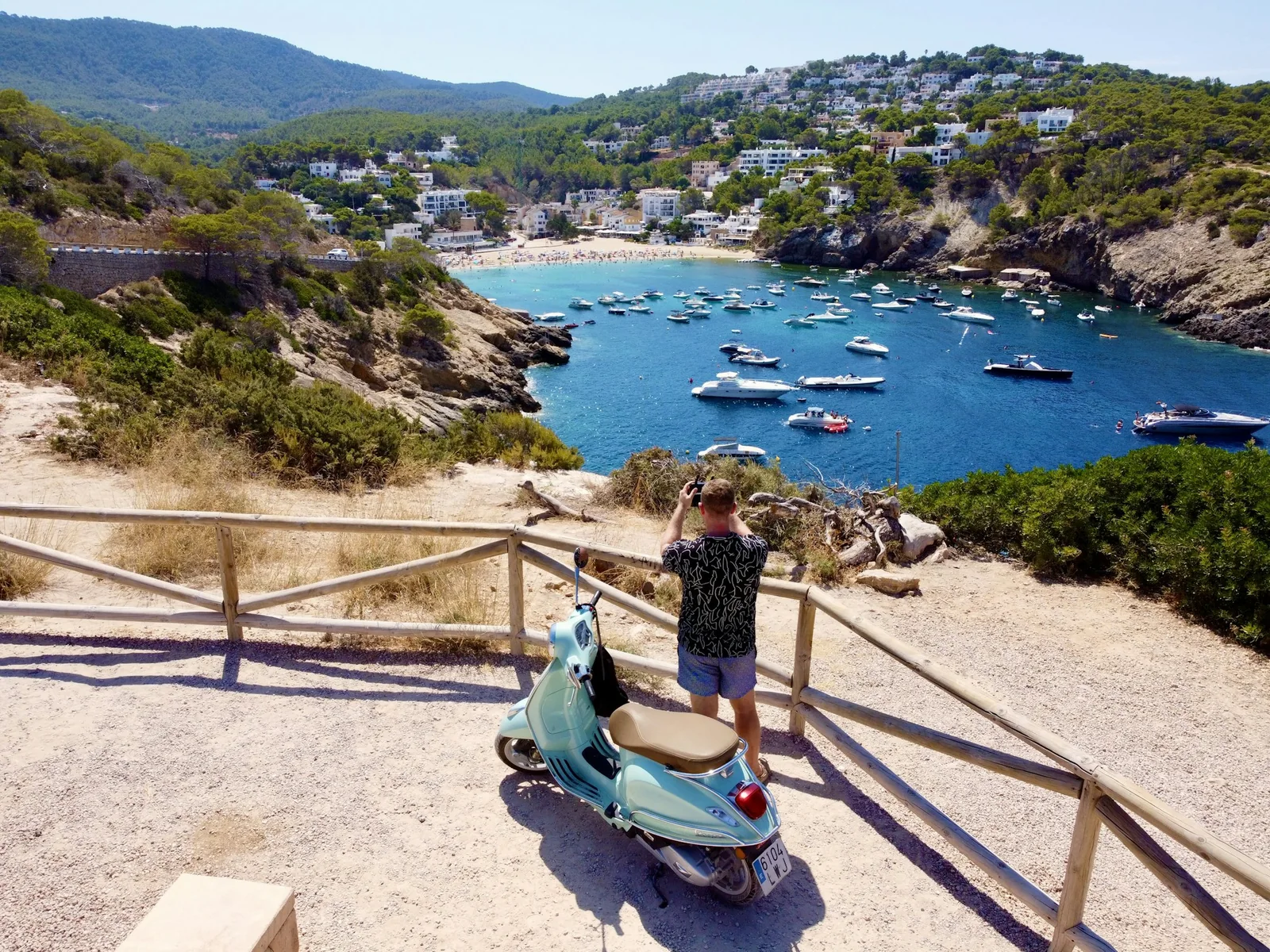
Getting around Ibiza by bus, taxi, ferry and car hire
One main road axis, a bus network rebuilt in 2026, metered taxis, boats from Eivissa port and a car park at almost…

Things to do in Ibiza: sights, markets, coves and walks, area by area
A day plan for each part of the island: the walled old town, a hill church, a market, a cave aquarium, a coast path…