West coast · Sant Josep
Cala Bassa beach, Ibiza: pine shade, shallow water and the way in
A wide golden cove facing north, with junipers and pines to the sand's edge, a gently shelving seabed and a bus stop about 50 metres from the beach.
Updated 26 October 2026
- Beach type
- Sand, shallow, pine-backed
- Faces
- North, sheltered in summer
- Shade
- Junipers and pines
- Bus stop
- About 50 m from the beach
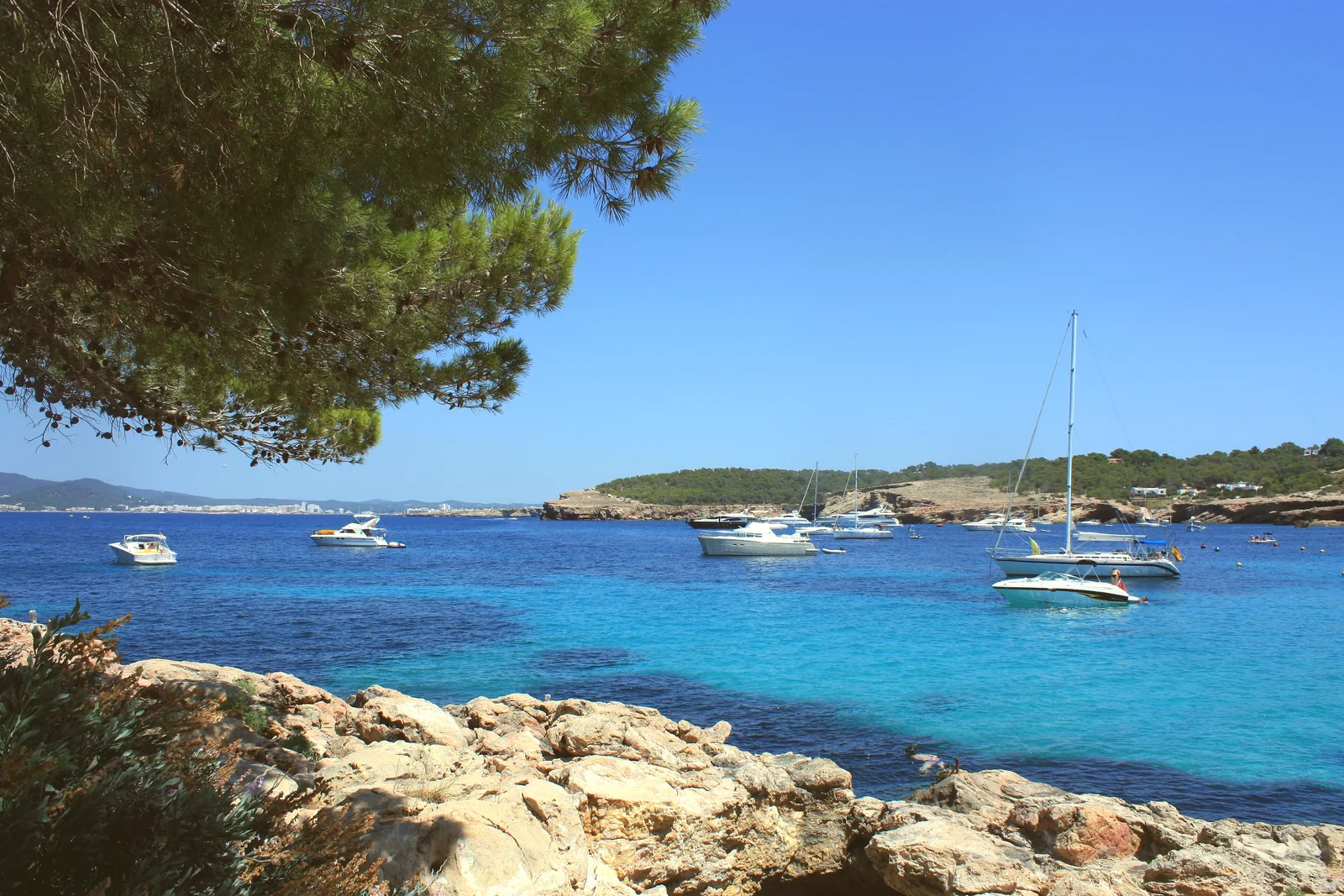
Cala Bassa is the shaded one. Where Cala Comte is open rock and sun, this cove is held in a wide curve of sand with junipers and pines coming down almost to the towels, and a rim of low rock on each side. The municipality's description calls the water a natural pool, and from the sand it reads like one: flat, very clear, and only slowly deepening.
Why the water stays calm
The cove faces north. In summer the prevailing winds miss it, so the sea inside rarely builds up any chop, and the seabed is sand with a gentle slope. That combination is why it is described as very safe for swimming, and as a place where small boats are used for learning to sail.
The official sheet adds one caveat: winds can still cross the bay on some days, so the calm is typical rather than guaranteed.
Calm does not mean empty. Cala Bassa is one of the best-known bays on this coast and the beach is busy through July and August. Boats anchor off it, and the view from the rocks at either end is of hulls on blue water rather than open horizon.
Shade, sand and what the beach offers
Natural shade is the main practical advantage. The tree line gives cover for part of the day, which is rare on this stretch of coast. The rest is seasonal: restaurants and beach bars, sunbed and umbrella hire, and a water-sports area, all in the high season only. A lifeguard works the beach in the same period.
Toilets belong to the restaurants. There are no showers. A ramp allows access for visitors with reduced mobility. Parking is available but tied to the restaurants, and the sheet gives no number of spaces, so in peak weeks it is worth arriving before the late-morning rush.
Getting there
By car the route runs from Sant Antoni de Portmany along the road signed for Port des Torrent, then on to the cove. The alternative is to turn off at Sant Agustí des Vedrà. Eivissa is about 21 km away by road and Sant Josep de sa Talaia about 8 km.
A regular bus runs in summer, and the stop is around 50 metres from the beach. That is closer than at most beaches on the coast, and it makes Cala Bassa one of the easier ones to reach without a car. Timetables change from year to year, so check the operator before planning a day around a particular departure; the transport page covers the island's bus network.
Snorkelling on the rocks
The rocky edges on both sides are where the fish are. On a calm day a mask is enough to follow the rock face down into the clear water. Stay inside the buoyed area close to shore, because boats come and go through the mouth of the cove.
A note on timing
The beach is full by the middle of the day in peak weeks, and the lunch crowd at the restaurants fills the back of the sand. Early morning gives an emptier shoreline; late afternoon brings the crowd down again, and the light on the northern rocks softens.
Outside the high season
Everything listed above as a service, from the lifeguard to the sunbeds and the water-sports area, belongs to the high season. In spring and autumn the beach is quieter, and also more basic: expect to bring your own water, shade and a plan for lunch. The cove itself, with its pines and its flat water, does not change, and the bus and the roads are far less crowded.
Other coves within reach
Cala Bassa belongs to a short chain of west-coast beaches. Measured in a straight line from the map point, Cala Comte is about 1.7 km to the south-west, Cala Codolar about 2.3 km to the south, and Port des Torrent about 2.4 km to the east. The municipality lists Cala Codolar, Cala Vedella and Ses Boques as the other beaches nearby.
A reasonable plan is to take Cala Bassa for the middle of the day, when shade matters, and move on to the west-facing coves for the evening light.
Questions people ask
Is Cala Bassa good for children?
Yes, it is one of the easier beaches on the west coast for families. The seabed is sandy and slopes gently, the water stays calm because the cove faces north, and a lifeguard is on duty in high season. Pine and juniper trees give natural shade at the back of the sand.
Which way does Cala Bassa face?
North. That keeps it sheltered from the typical summer winds, although a breeze can still blow across the bay. It also means the sun does not set over the water here, unlike at Cala Comte, a short drive to the south-west.
Can you get to Cala Bassa by bus?
A regular bus runs in summer, with a stop about 50 metres from the beach, according to the Sant Josep tourism site. By car, follow the signs for Port des Torrent from Sant Antoni, or take the left turn at Sant Agustí. Check the current timetable with the bus operator.
Are there showers at Cala Bassa?
The official beach sheet lists toilets, linked to the restaurants, and a ramp for reduced mobility, but no showers. Services such as sunbed hire, the lifeguard and the water-sports area run in the high season only, so out of season bring what you need.
Sources Sant Josep tourism – Cala Bassa
Nearby on the map
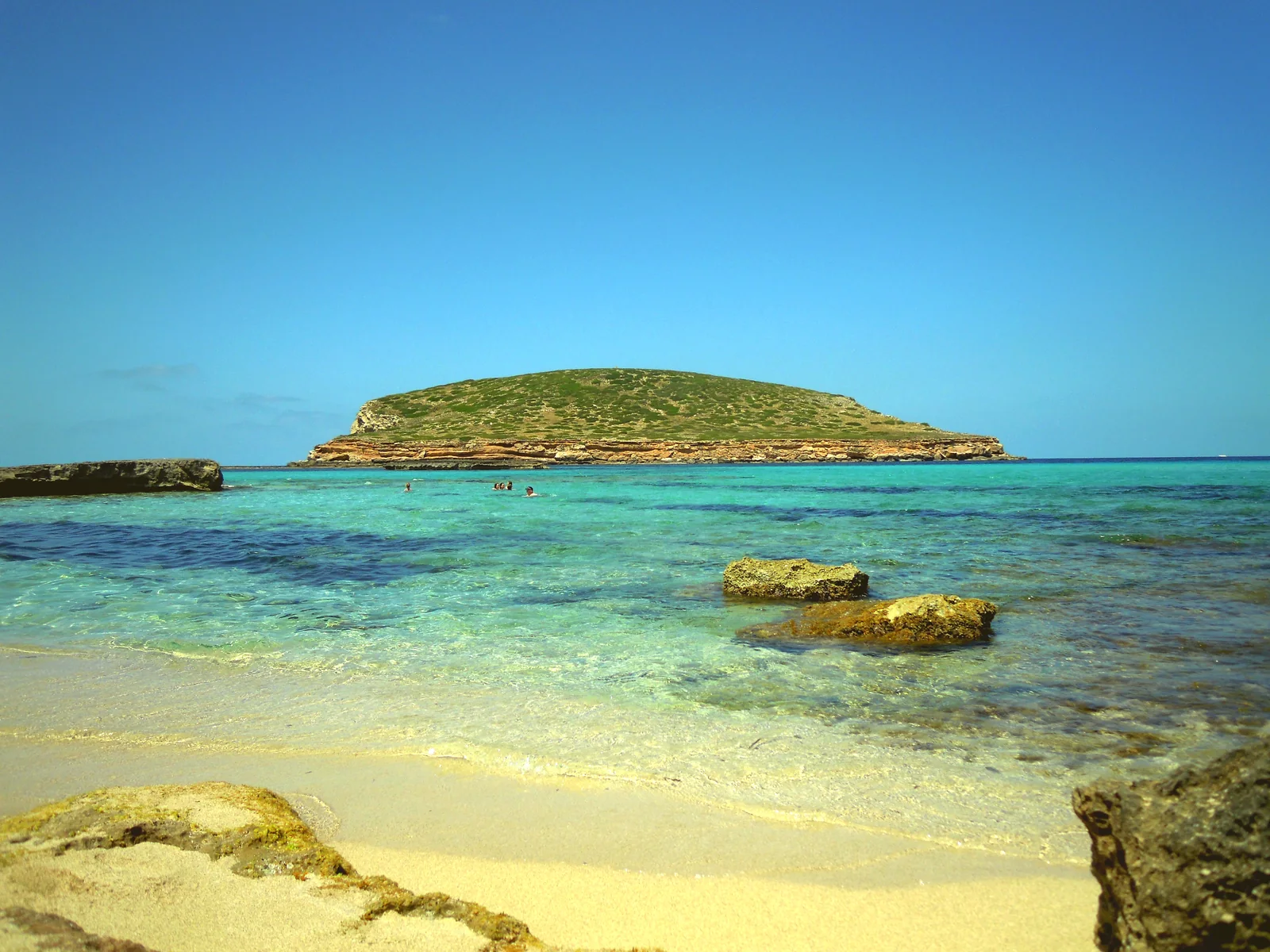
Cala Comte map: the beaches, the parking and the sunset rocks
A string of small sand coves and flat rock shelves on Ibiza's western tip, facing a scatter of islets across water so…
West coast · Sant JosepCala Codolar, Ibiza: the small pebble-and-sand cove near Cala Tarida
A small cove of sand and pebbles between pine-topped cliffs, about a kilometre and a half from Cala Comte and…
Sant Antoni de Portmany · West coastSan Antonio Ibiza map: hotels, the bay and the Sunset Strip
A wide bay facing west, a harbour and promenade at its head, hotel districts along both shores and the coves and…