Island notes
Ibiza beyond the clubs: nature, history and villages worth the detour
Salt flats, a rock rising nearly 400 metres from the sea, a fortified old town and a Phoenician settlement: the parts of Ibiza that have nothing to do with a dance floor.
Updated 18 November 2026
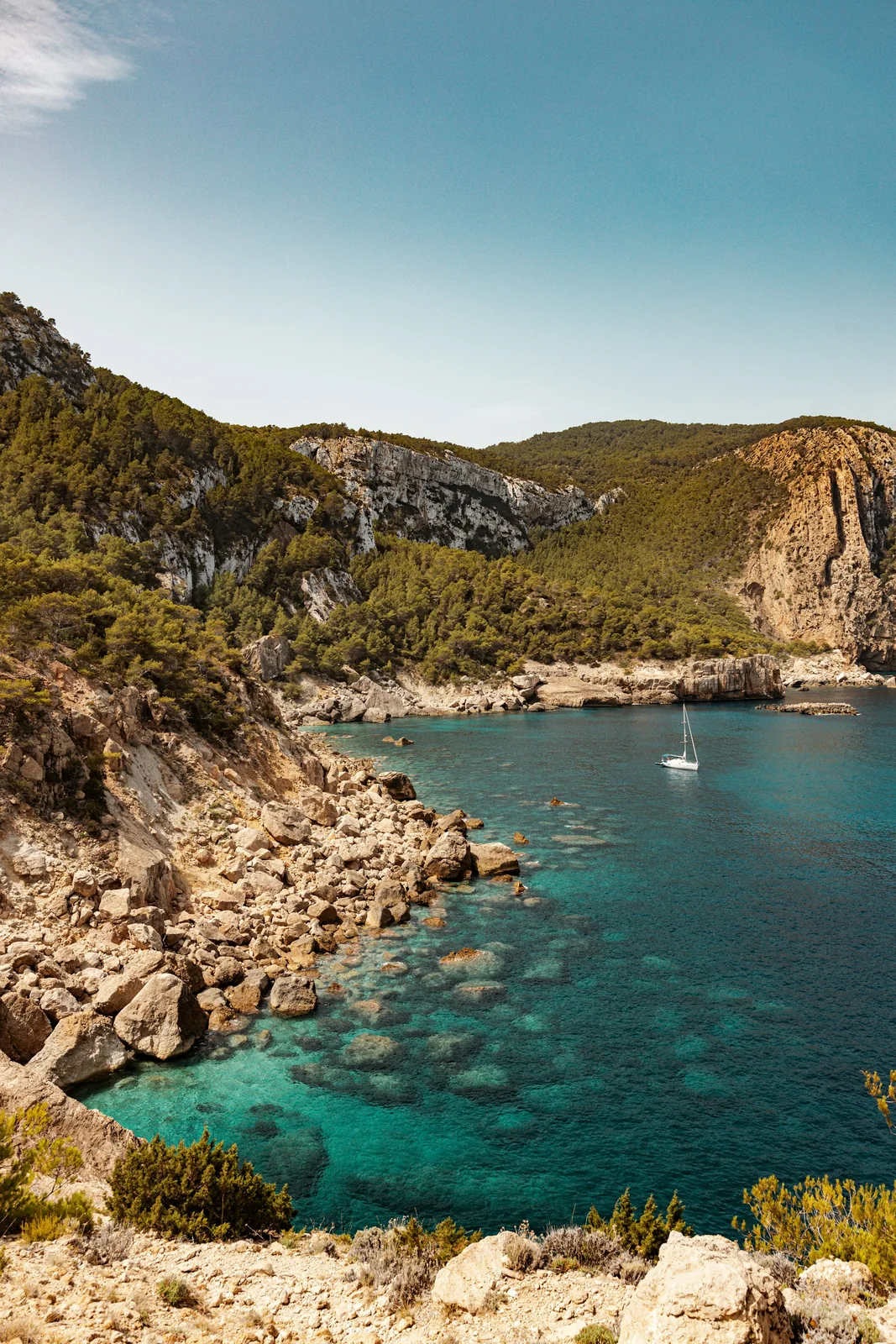
Ibiza is better known for its clubs than for anything else, yet most of the island is farmland, pine forest, salt marsh and old stone villages. The sights below sit within an hour's drive of one another, and several of them carry UNESCO recognition. A day built around any two of them gives a very different picture of the island from the one on a club flyer.
Nature in the south: Ses Salines and Es Vedrà
The south tip of Ibiza is taken up by the Ses Salines Natural Park, a protected area that runs across the strait to Formentera and covers both land and sea. On the Ibiza side the landscape is a mix of shallow salt pans, dunes, juniper scrub and low cliffs. The pans have produced salt for well over two thousand years, and the white piles still stand beside the water in summer.
The park is an important stop for birds. Flamingos, herons, avocets and many waders use the lagoons on migration or through the winter, so spring and autumn are the best seasons for walking the tracks with binoculars. In midsummer the heat is considerable and shade is thin. The sandy beaches along the coast are covered on the page for Ses Salines, including how the dunes and the sea-grass banks protect the water.
Further west, Es Vedrà is the island's best-known silhouette. It rises close to 400 metres straight out of the sea off the south-west coast, with the smaller Es Vedranell beside it. Local legend has attached all kinds of stories to it, from Homeric sirens to magnetic anomalies, but the geology is simpler: a limestone tower, a protected reserve with its own lizards and nesting birds, and no landing. The classic viewpoints are the coastal path and tower above Cala d'Hort and the cliffs near Cala Vedella. The hour around sunset is the one to aim for.
History in the capital: Dalt Vila and Sa Caleta
Ibiza Town's upper town, Dalt Vila, is a hill of whitewashed houses inside a ring of Renaissance fortifications. The bastioned walls were built in the 16th century under Philip II to defend against raids from the sea, and they are some of the best-preserved of their kind in the Mediterranean. The main entrance is the Portal de Taules, with its drawbridge and a coat of arms above the arch. From there, lanes climb to the cathedral, a Gothic building with a later Baroque nave. It sits on the summit and gives wide views over the harbour, Formentera and the salt flats.
Dalt Vila was inscribed on the UNESCO World Heritage List in 1999 as part of "Ibiza, Biodiversity and Culture", a listing that also includes the Phoenician-Punic settlement of Sa Caleta, the Puig des Molins necropolis and the sea-grass meadows off the south coast. The old town works best on foot and without a schedule. Small museums, viewpoints on the walls and a few cafes break up the climb.
Sa Caleta, on the south coast not far from the airport, is a different scale altogether. It is the remains of a Phoenician village founded around 650 BC, with foundations of houses laid out along narrow streets. Few of the walls stand more than knee height, but the layout is clear. The site and the cove next to it can be seen on the page for Sa Caleta. It pairs well with a swim afterwards, since the red cliffs and shingle of the cove are a couple of minutes away.
Villages inland
Away from the coast, a few villages around the churches keep the island's older character.
Sant Carles de Peralta, in the north-east, grew around a whitewashed church dating to the 18th century. It became a gathering point for the hippie crowd of the late 1960s and 1970s, and a weekend market nearby still carries the memory. The village is also home to the iconic Bar Anita, a country bar facing the church square that locals and visitors have long used as a meeting spot. The large market at Las Dalias, a few minutes by road, is described on its own page: Las Dalias market.
Santa Gertrudis de Fruitera is a small inland village in the middle of the island, with a church square, a handful of bars and a scattering of galleries and craft shops. It is more of a stop for coffee and a walk around the lanes than a destination in its own right, and the surrounding countryside of almond groves and carob trees is the real draw. Both villages are best visited outside the middle of the day, when the roads are quieter.
Putting a day together
Ibiza is small enough that these places combine easily, but the distances are not trivial on a hot day. A workable sequence for the south and centre is Dalt Vila in the morning, Sa Caleta and a swim at midday, then Ses Salines in the late afternoon for the light on the pans. The north-east pair, Sant Carles and Las Dalias, fits a market morning and a beach afternoon on the east coast. Es Vedrà is the natural finish to a west-coast evening.
A rental car or scooter makes this easy; buses reach Ibiza Town, Santa Eulària and most beach areas, but rarely the trailheads and viewpoints. The map of Ibiza Town shows how Dalt Vila, the harbour and the main streets fit together before the climb.
Questions people ask
How much time does Ibiza Town's Dalt Vila need?
A slow walk up through the walls to the cathedral and the viewpoints takes about two to three hours, longer with museum stops. The streets are steep and cobbled, so comfortable shoes matter more than a plan. Early morning or late afternoon is cooler in summer.
Can you swim at Ses Salines?
Yes. The beaches along the park's coast, including Ses Salines itself, are open for swimming and are among the most popular on the south of the island. The salt flats behind them are protected, so stay on the marked paths and tracks.
Is Es Vedrà open to visitors?
The rock is a protected nature reserve and is not a place to land. It is seen from the coast near Cala d'Hort and Cala Vedella, or from a boat that keeps its distance. The viewpoints on the road above are free.
Sources Consell d'Eivissa – Ibiza, Biodiversity and Culture (UNESCO) · Parc Natural de ses Salines d'Eivissa i Formentera · Wikipedia – Es Vedrà
Nearby on the map
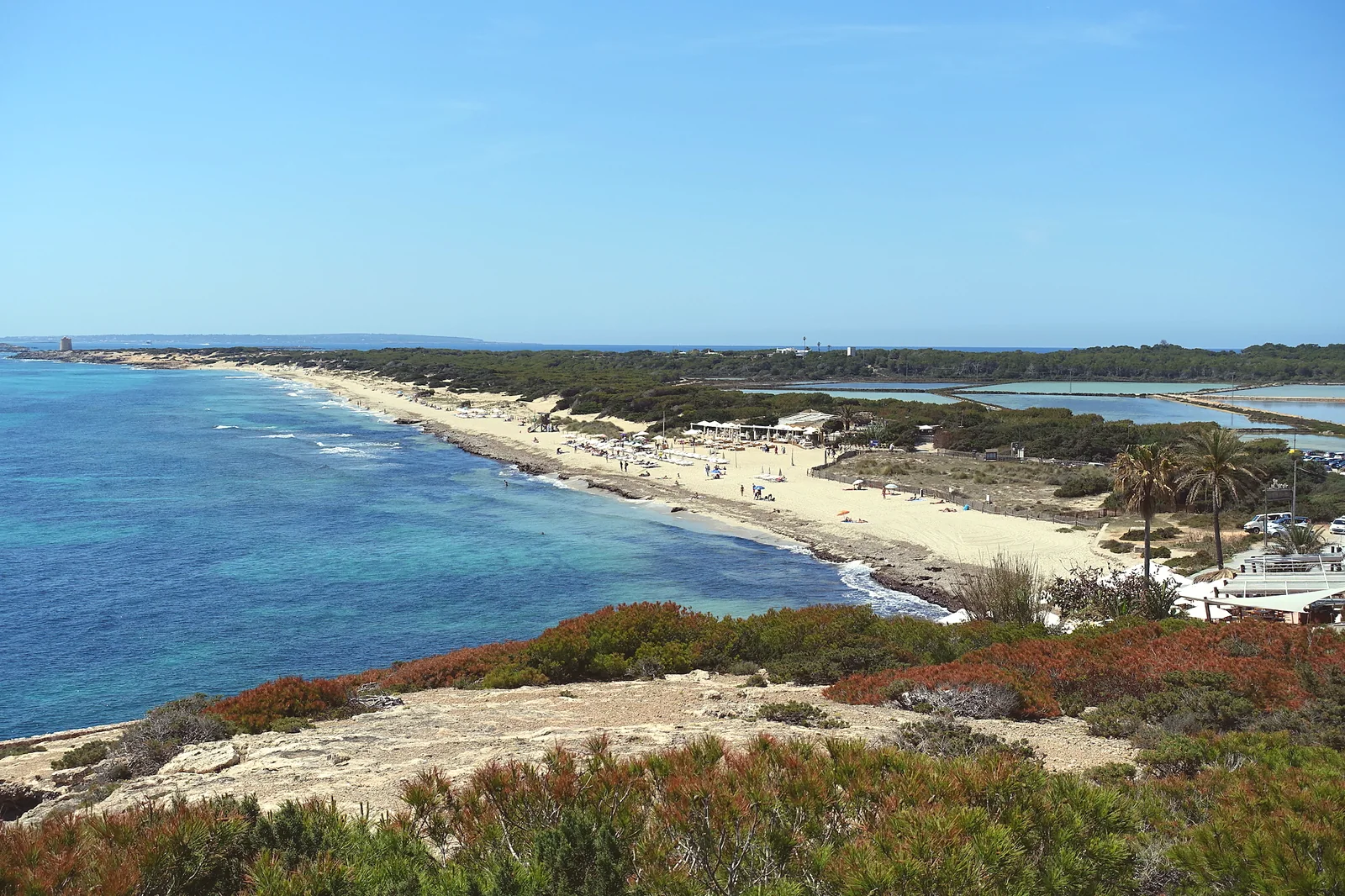
Ses Salines beach, Ibiza: what the natural park means for a beach day
A long stretch of pale sand beside the salt ponds, inside the Ses Salines natural park, facing south towards…
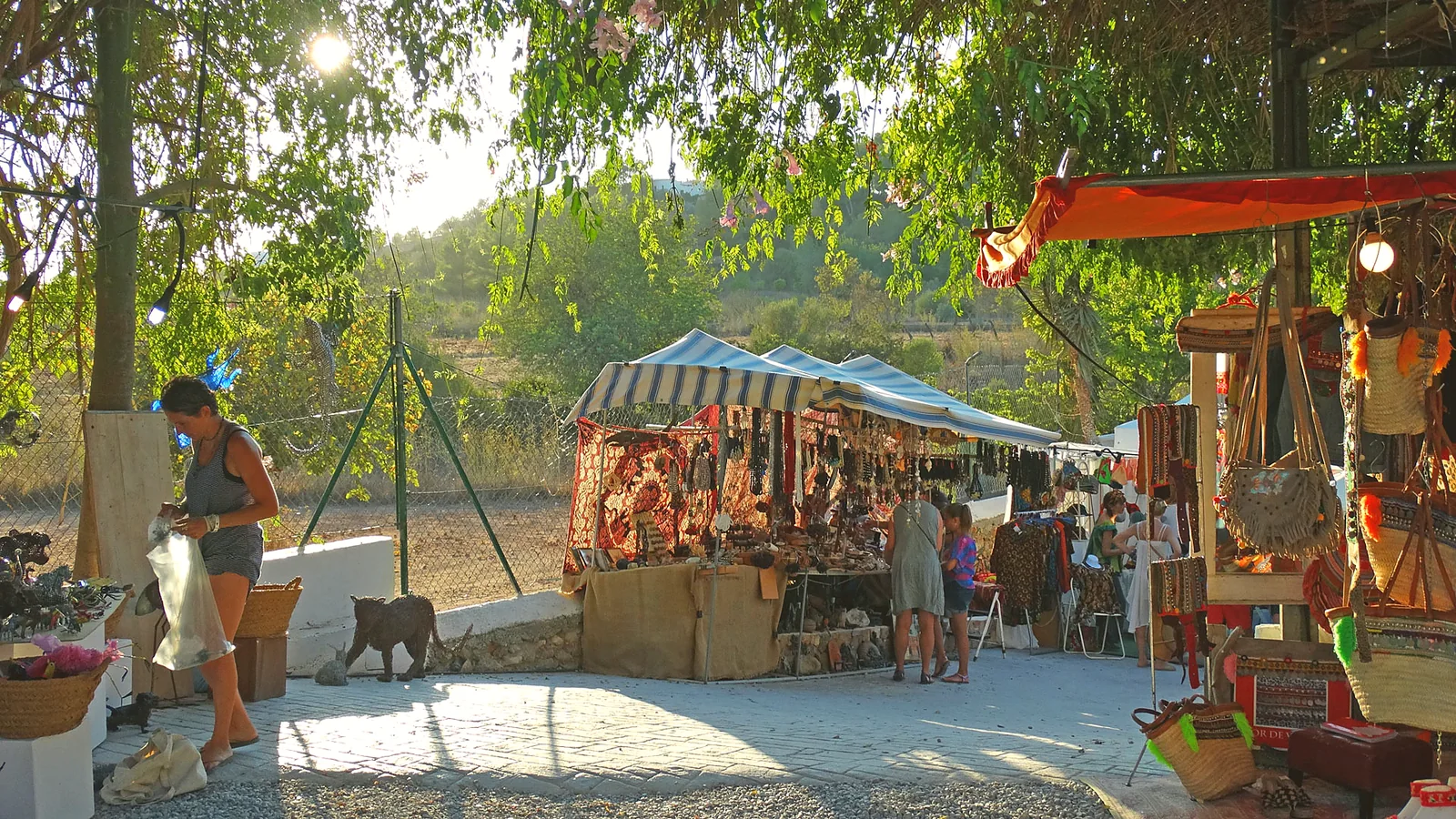
Las Dalias hippy market, Ibiza: market days, seasons and how to go
The island's best-known hippy market, started in 1985 with five stalls and now more than 300, with a big Saturday…
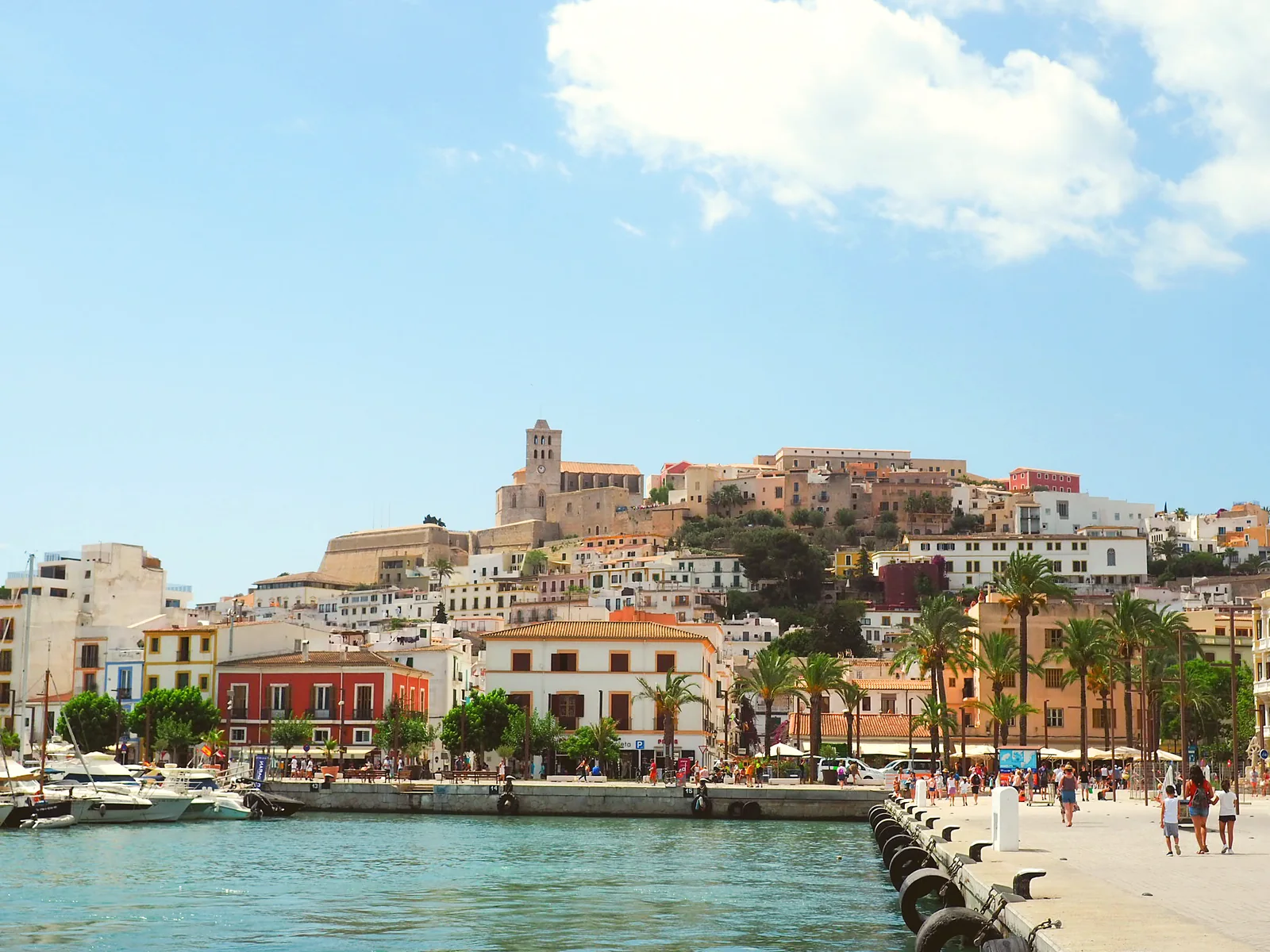
Ibiza Town map: Dalt Vila, the port and the streets of Eivissa
Eivissa climbs from its harbour to a walled hill, with the old town above, the port at its foot and a grid of shopping…