East coast · Santa Eulària des Riu
Cala Llenya beach: a sandy pine-ringed cove near Sant Carles
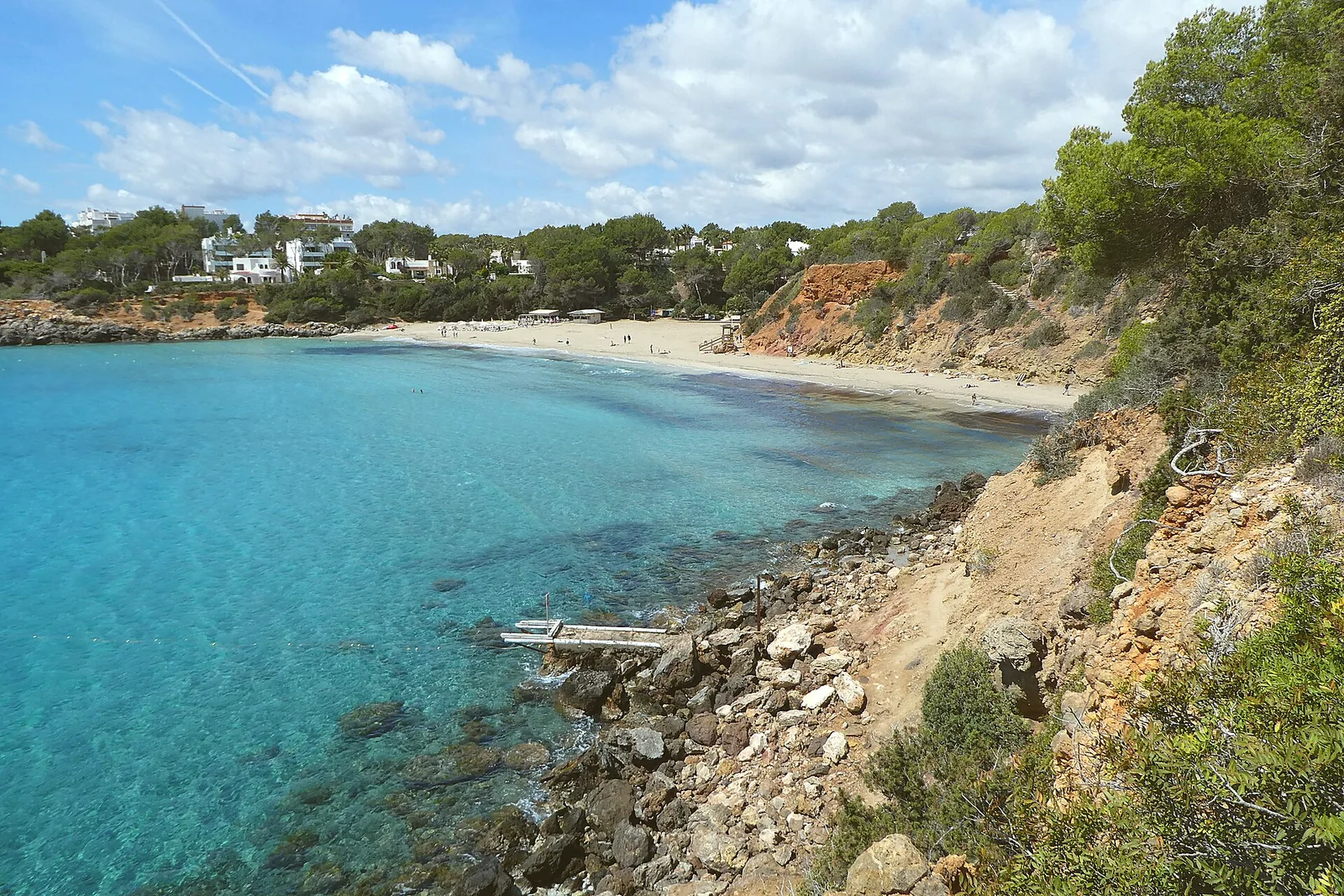
A wide, shallow, sandy cove closed in by pine-covered hills, a few kilometres from Sant Carles, with enough facilities to spend a full day.
Updated 24 October 2026
- Beach type
- Golden sand, shallow water
- Length
- About 200 m
- Facilities
- Loungers, bars, lifeguards
- From Sant Carles
- About 3 km
Cala Llenya is the cove people choose when they want a proper beach day on the east coast without a long drive from the island's main roads. It sits in a stretch of cliffs between Cala Nova and the Punta d'en Ribes, close to the urbanisation of Can Jordi, in a bowl of pine-covered hills.
What the name tells you
Llenya is the Catalan for firewood, and the Balearic tourism board says the cove owes its name to the dense pinewoods where wood was gathered. The pines are still the first thing you see from the road, and they give shade at the back of the beach, where a dry torrent bed, the Es Coix, reaches the sand.
The sand and the sea
The beach is sand, golden in colour, roughly 200 metres long. Spain's tourism board lists it as 220 by 80 metres and calm-watered; the Balearic tourism board says 200 by 60. The seabed shelves gently, so the water is shallow for a good way out. On each side the old fishermen's piers survive, a small reminder of what the cove was before the loungers arrived.
On the beach there are loungers and umbrellas for hire, showers and toilets, water-craft rental, lifeguards, and a few beach bars and restaurants. It is also a place for windsurfing, kite surfing, paddle surfing and kayaking, according to the Balearic tourism board.
Two short walks
The back of the beach is the start of two paths.
- To Cala Nova. A path from the back of the beach, by the dry torrent, leads to the neighbouring bay of Cala Nova.
- To Cala Mastella. A pedestrian route through the pines runs to Cala Mastella, a much smaller beach at a stream mouth, with a beach bar.
Both walks are short, but neither is a path for sandals, and they are not signed at every turn.
Getting there
The Balearic tourism board says to follow the signs from Sant Carles (3 km) towards Cala Mastella, then take the turn-off for Cala Llenya, where parking is near the beach. In summer the car park fills by late morning. The route starts at Sant Carles, the inland village on the way.
Water sports and swimming
The shallow, sandy bottom makes the cove good for learners: kayaks and paddleboards are the easy options, while windsurfing and kite surfing depend on the wind. The Spain tourism board lists water-craft rental among the services on the beach. For plain swimming the cove is protected by its cliffs, and the water is calm on most summer days.
Lifeguards operate in season, and the shallow shelf means children can paddle a long way out.
Cala Llenya at a glance
| Cala Llenya | Cala Mastella | |
|---|---|---|
| Length | About 200 m | About 50 m |
| Sand | Golden, shallow | Sand and gravel |
| Services | Loungers, bars, lifeguards, rentals | Beach bar |
| Feel | Full beach day | Small, boats on moorings |
The two are close enough to visit together: lunch at one, a swim at the other.
Pair it with a market
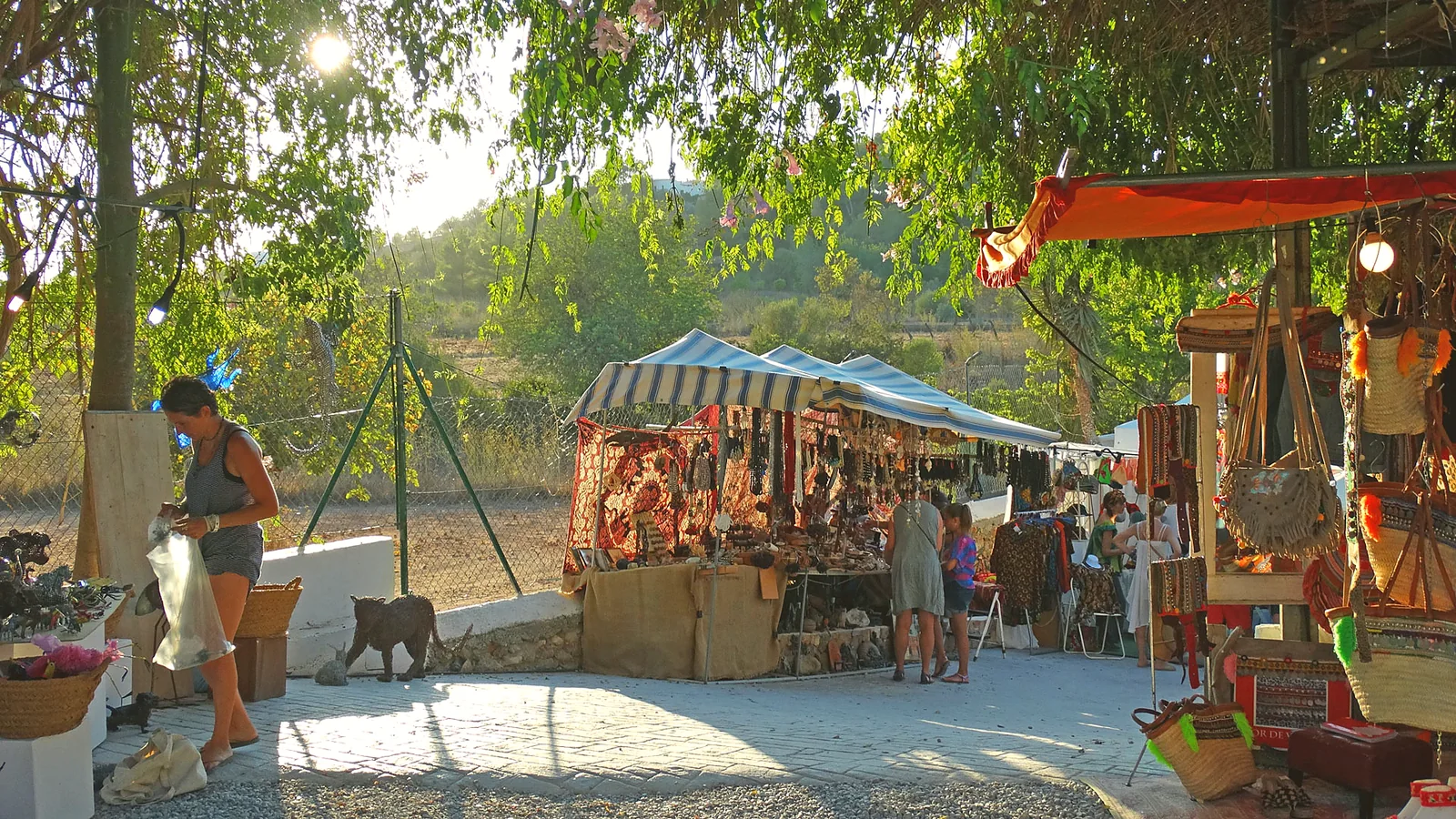
The tourism board mentions that the beach has a friendly feel on market day, when the Las Dalias hippy market takes place in Sant Carles, with hundreds of stalls selling crafts, clothes and accessories. Read about it on the Las Dalias page; the board gives Saturday, but check the current days before going.
Time of day
The cove opens to the east, which suggests morning sun on the sand and the hills shading it earlier in the evening, although the pine cover and the cliffs mean the shade arrives unevenly along the beach. Spain's tourism board lists it as isolated rather than urban, a useful reminder that the cove has no town of its own: it is a beach with a car park, a few bars and the pines behind it.
One more thing
The Santa Eulària des Riu council has added Cala Llenya to the ISO 14001 environmental certification that already covers several of the municipality's beaches. It is a management standard rather than a promise about the sand on any given day.
Questions people ask
What does Cala Llenya mean?
The Balearic tourism board says the name comes from the dense pine forests where firewood, llenya in Catalan, was once collected. The spelling Cala Leña, the Spanish form, is also used on some maps. Both refer to the same beach on the east coast, in the municipality of Santa Eulària des Riu.
How big is the beach?
Sources vary. The Balearic tourism board gives about 200 metres by 60 metres, and Spain's tourism board gives 220 by 80. Either way it is one of the larger beaches on this stretch, with room to spread out and a gently sloping seabed that suits children.
Is it quiet?
Not always. It is among the busier coves of the east coast, because it has loungers, bars, restaurants and lifeguards and is easy to reach by road. The beach is calmest in the morning and in May, June and September; on summer weekends the sand fills up by lunchtime.
Can you walk to other beaches from here?
Yes. A path at the back of the beach, beside the dry stream bed of the Es Coix, leads to Cala Nova, and a pedestrian route through pines links Cala Llenya with Cala Mastella. The walks are short but not signposted everywhere, so wear shoes and check the route first.
Sources Illes Balears tourism – Cove Llenya · Spain tourism – Cala Llenya · Santa Eulària des Riu council – Cala Llenya
Nearby on the map
Cala Mastella: a small fishermen's cove near Sant Carles
A tiny beach of sand and gravel at the mouth of a stream, with fishing boats on moorings, pines on the slopes and one…
Sant Carles de Peralta, Ibiza: the village, church and hippy past
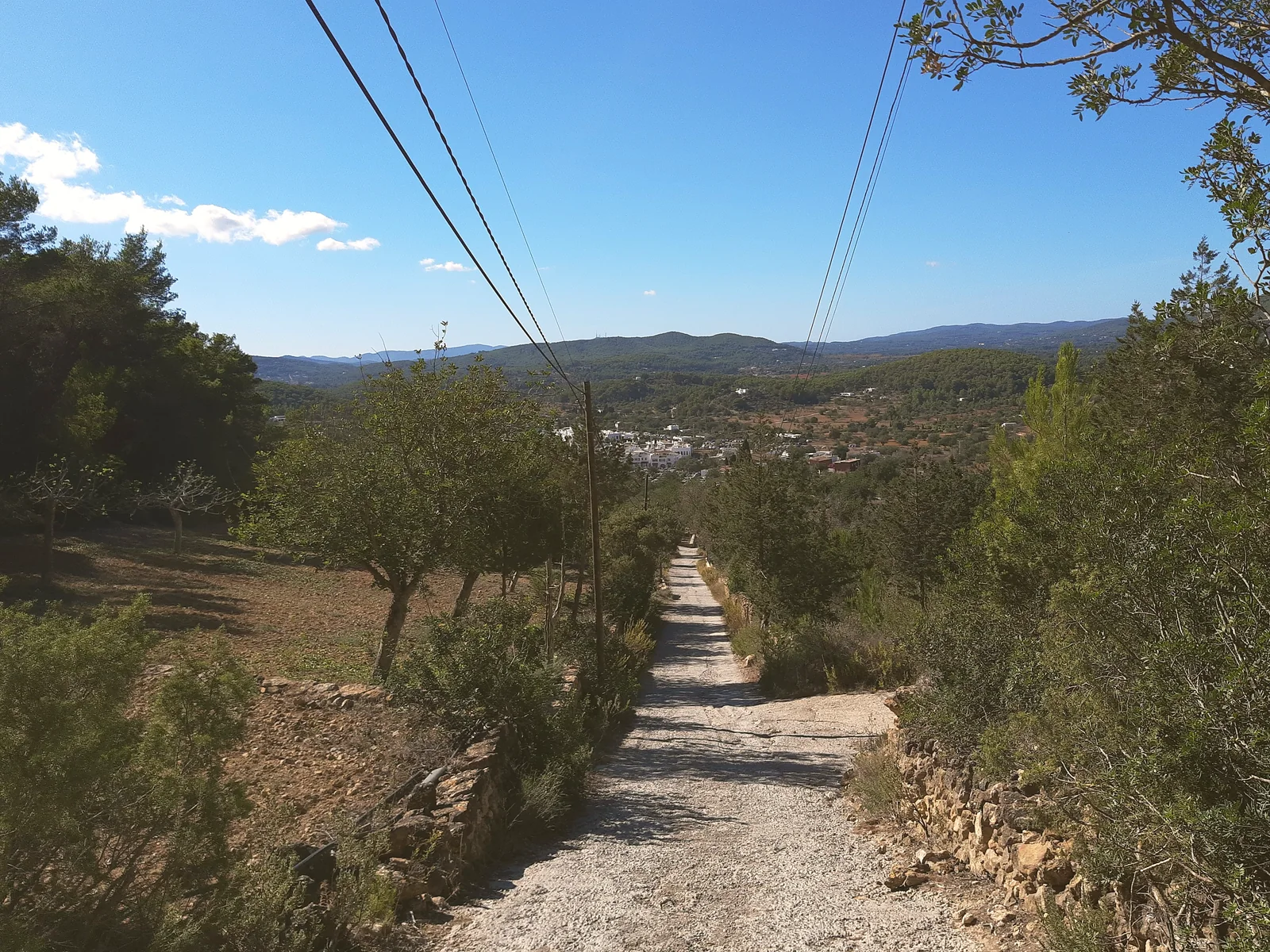
A hill village around a whitewashed church, where the hippy scene of the 1960s and 70s left a lasting mark and two…
Las Dalias hippy market, Ibiza: market days, seasons and how to go
The island's best-known hippy market, started in 1985 with five stalls and now more than 300, with a big Saturday…