South coast · Sant Josep
Cala Jondal, Ibiza: the pebble bay, the beach bars and the road in
A south-facing bay of smooth pebbles and imported sand between two headlands, lined with beach restaurants and a long row of sunbeds at the waterline.
Updated 8 November 2026
- Beach type
- Pebbles with imported sand
- Faces
- South, generally sheltered
- Last stretch
- Unpaved track
- Bus
- Not listed, car or bicycle
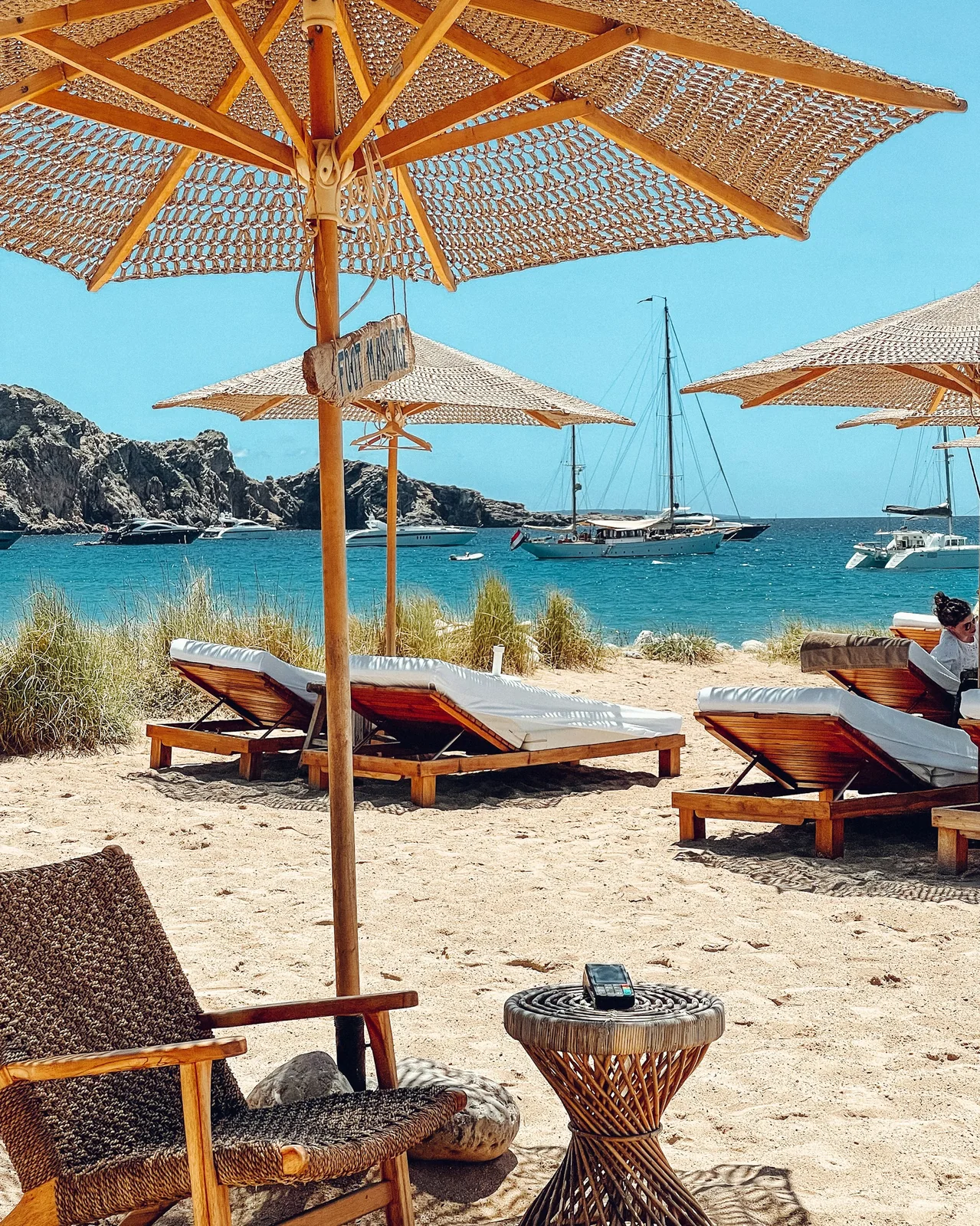
Cala Jondal is the south coast's beach-bar bay. From the water's edge back to the car park, the shoreline is a long line of sunbeds and restaurant terraces, with yachts at anchor just offshore, and the atmosphere the municipality describes mixes family lunches with a more fashionable, cosmopolitan crowd. Market stalls selling swimwear and summer clothes add to it, and massages are on offer at the water's edge.
It is also, underneath, a plain natural bay. Two headlands hold it, there is farmland behind, and a seasonal stream reaches the sea at one end.
Pebbles, with sand added
The first thing to learn is underfoot. The beach is smooth, rounded pebbles, a result of erosion, and the official tourism page says imported golden sand has been added to make it more comfortable. A few metres into the water the seabed turns to sand, so the swimming itself is easy, and beach shoes make the entry less awkward.
The bay faces south and is generally sheltered, with only light onshore winds. Between the two headlands the water stays calm on most summer days, and the pines and junipers on the surrounding slopes keep the shoreline green.
The beach-club side
Bars and restaurants serve Mediterranean and more modern cooking, and sunbeds sit right on the waterline. Parking is available, but it is tied to the restaurants, and the official sheet does not list lifeguard cover, toilets or showers. Expect the practicalities, such as toilets and drinks, to come with whichever restaurant you are using.
The result is a beach organised around a day on a sunbed and a long lunch, rather than a stop with a towel. Anyone who wants to swim and leave can still do it, but the front rows belong to the terraces. This page does not rate or recommend individual venues.
Getting there
Cala Jondal is a car or bicycle destination. From the Airport Road, take the signposted left turn for Cala Jondal near the airport; the last stretch is an unpaved track. From the Sant Josep road there is a second approach, signed at kilometre 7.
Eivissa is about 12.5 km away by road and Sant Josep de sa Talaia about 9.5 km. The official page lists no bus.
Close neighbours
The south coast runs on to the east and west of the bay in a series of small coves:
| From Cala Jondal to | Straight-line distance |
|---|---|
| Sa Caleta | about 1.7 km to the east |
| Platja d'en Bossa | about 8.3 km to the east |
| Ses Salines | about 7.1 km to the east |
Sa Caleta, the nearest, is a very different place: a small cove with fishermen's huts and the remains of a Phoenician settlement beside it. Es Bol Nou, a little sandy beach in the same neighbourhood, is popular with islanders and has limited space.
What is around the bay
The surroundings are less built-up than the beach suggests. The municipality describes traditional Ibizan farmland close to the bay, pines and junipers on the slopes, and the mouth of a seasonal stream at the shoreline, which is dry for much of the year. The two headlands that frame the cove also hold the sea in: from the sand the horizon is open to the south, with the anchored yachts as the only crowd on the water.
Compared with Ses Salines, the long, flat sand beach of the natural park, Jondal is a compact bay where the pebbles, the terraces and the headlands are all within a few steps of each other. The two suit different days.
Practical notes
The road ends in an unpaved track, so a low, loaded hire car deserves a slow approach. There is no lifeguard information on the official sheet, so use judgement in the water, and keep clear of the anchored yachts and tenders. Outside the summer season the terraces thin out, and the bay returns to a quiet pebble beach between two headlands.
Questions people ask
Is Cala Jondal a sand or a pebble beach?
Mostly pebbles. The Sant Josep tourism site describes smooth, rounded stones shaped by the sea, with imported golden sand added to make it more comfortable. A few metres into the water the seabed turns to sand. Beach shoes make the first steps easier.
How do you reach Cala Jondal?
By car or bicycle. From the Airport Road, follow the signposted left turn for Cala Jondal near the airport; the last stretch is an unpaved track. It can also be reached from the Sant Josep road by following signs at kilometre 7. The official sheet does not list a bus.
Is there parking at Cala Jondal?
Yes, but it is tied to the restaurants. The official information lists parking as available in association with the beach restaurants. In high season, arriving earlier in the day is the practical way to secure a place, and the last stretch of road is an unpaved track.
Is Cala Jondal sheltered?
Generally yes. The bay faces south and sits between two headlands, so it is protected, with only light onshore winds. Pines and junipers surround the area, and yachts anchor just offshore in the summer months, which gives the bay its sheltered, boat-filled look.
Sources Sant Josep tourism – Des Jondal beach · Sant Josep tourism – South of Sant Josep: Sa Caleta, Es Bol Nou, Cala Jondal
Nearby on the map
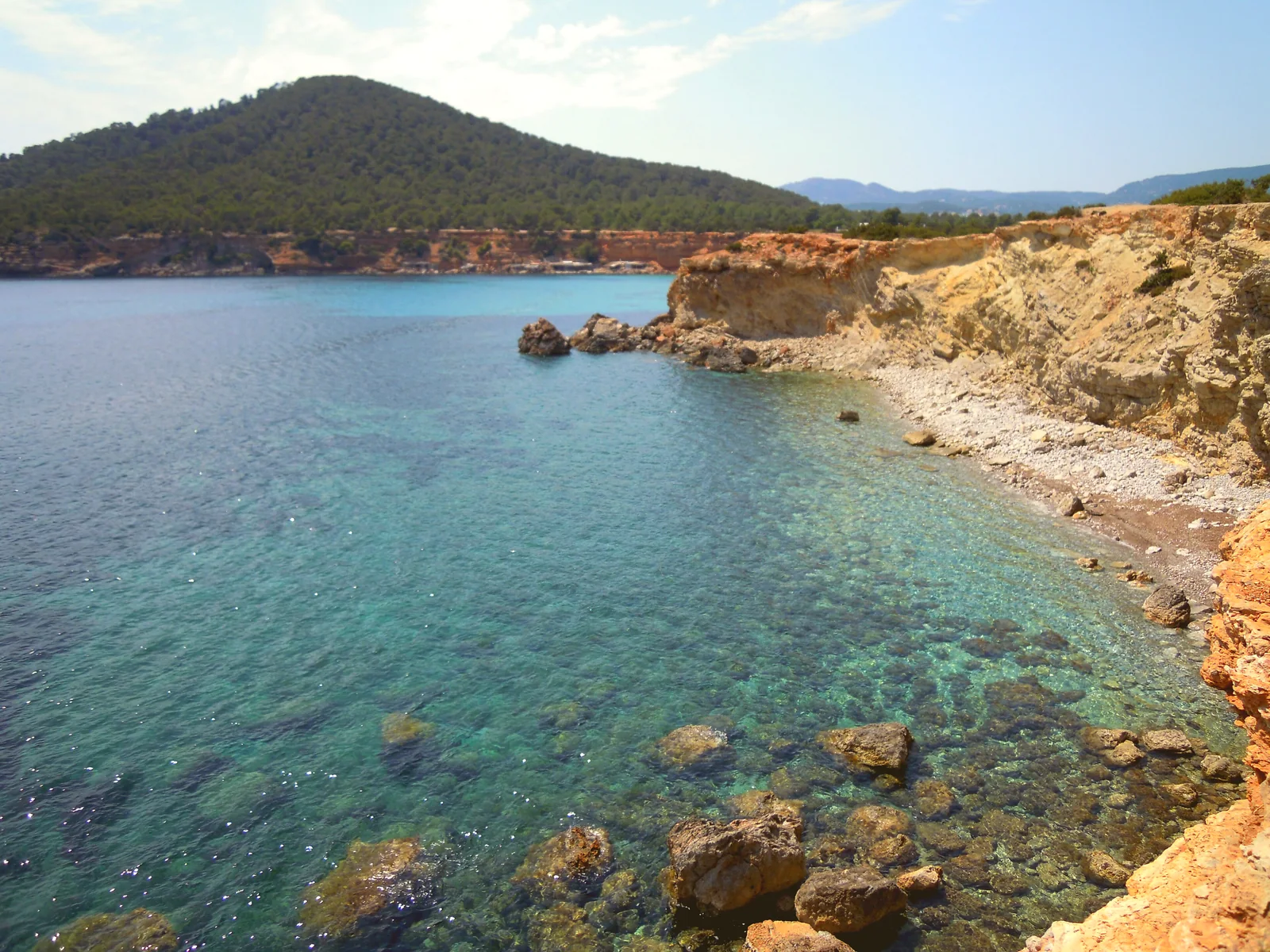
Sa Caleta, Ibiza: the cove, its huts and the Phoenician settlement
A small horseshoe cove of rust-red cliffs and fishermen's huts, beside the remains of a Phoenician settlement that is…
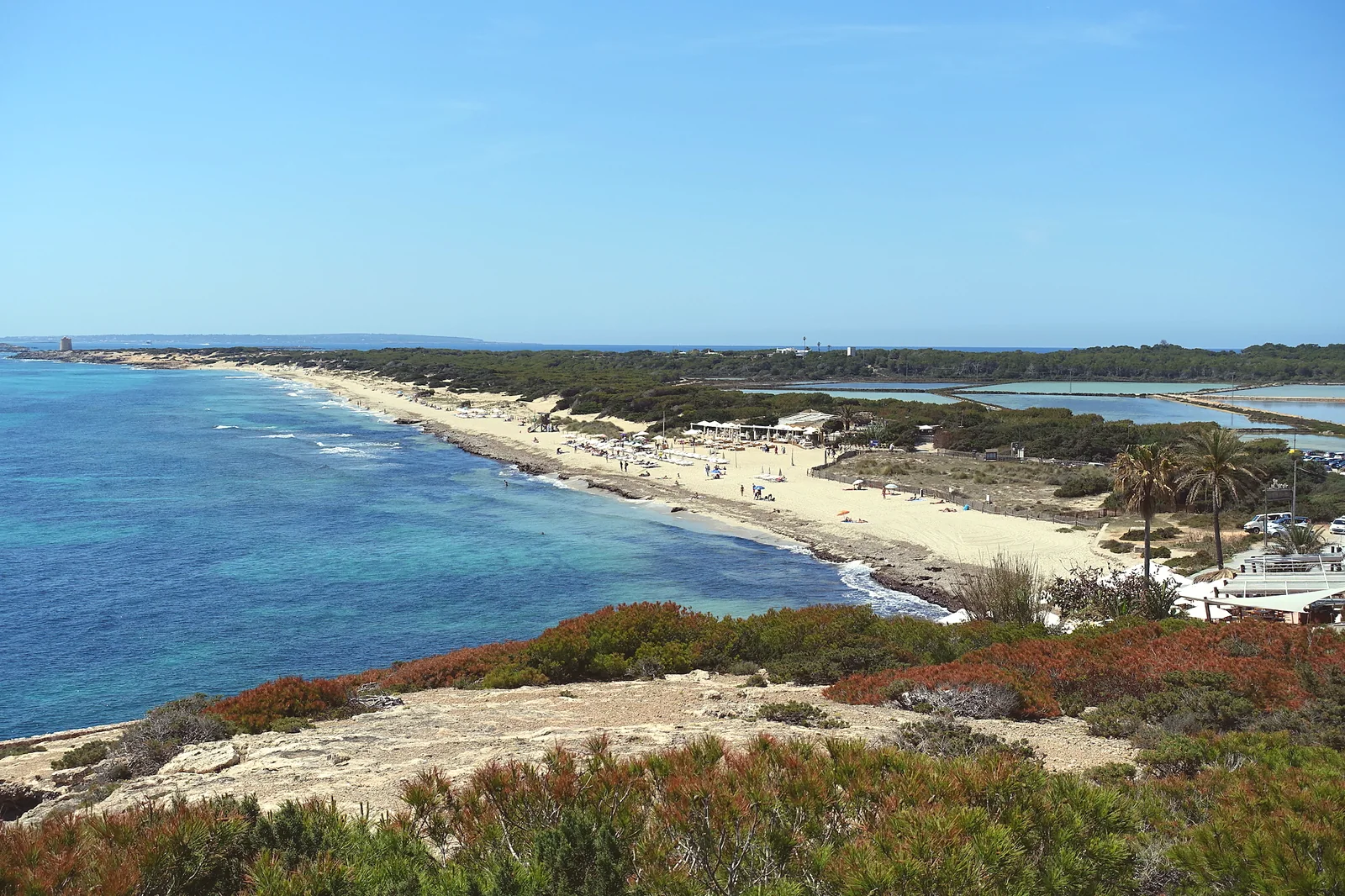
Ses Salines beach, Ibiza: what the natural park means for a beach day
A long stretch of pale sand beside the salt ponds, inside the Ses Salines natural park, facing south towards…
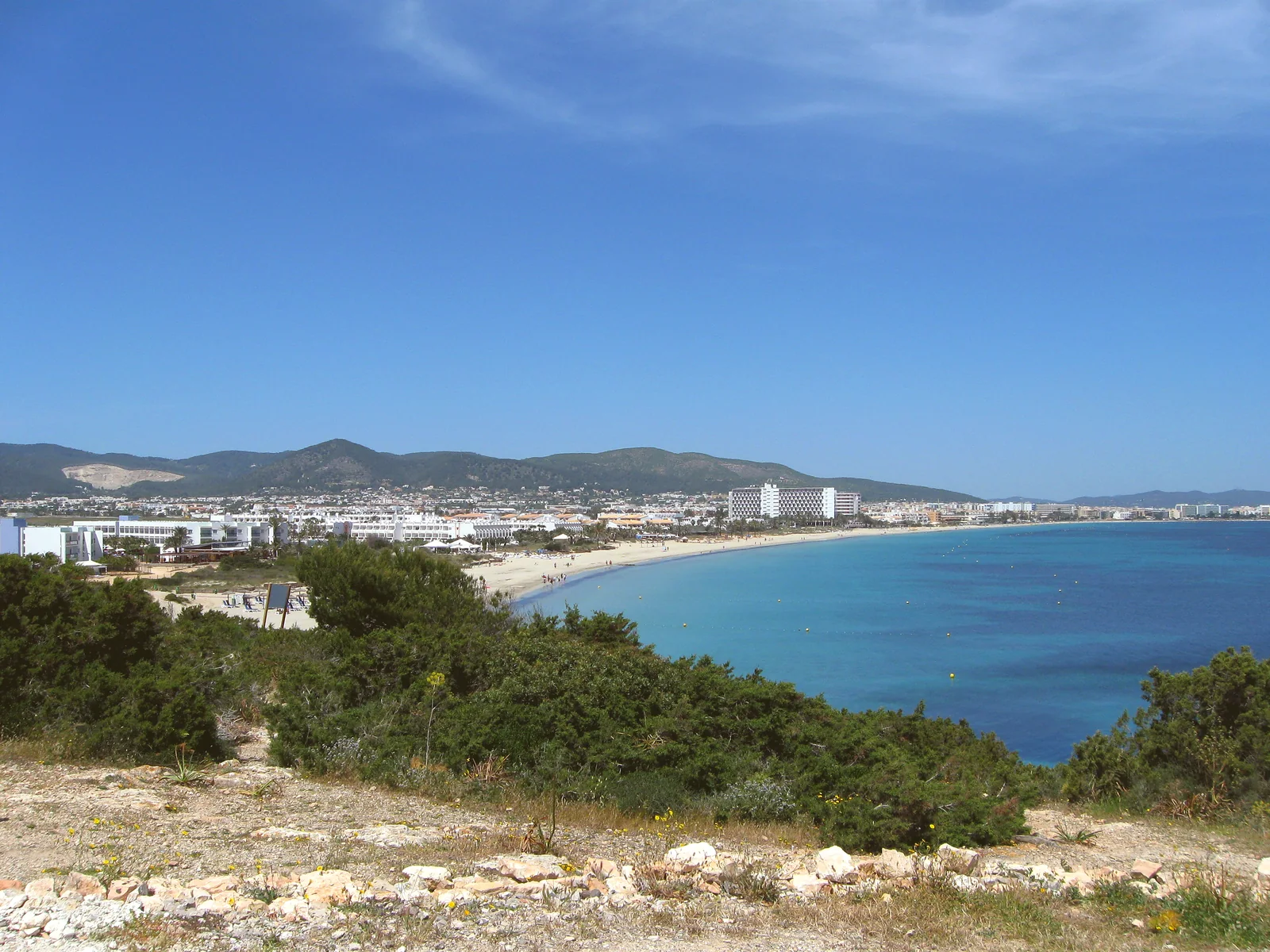
Platja d'en Bossa, Ibiza: the longest beach, its map and the tower
About 2.7 km of fine sand in an open bay south of Ibiza Town, backed by a resort of hotels and bars, with a…