Sant Antoni · Sant Antoni de Portmany
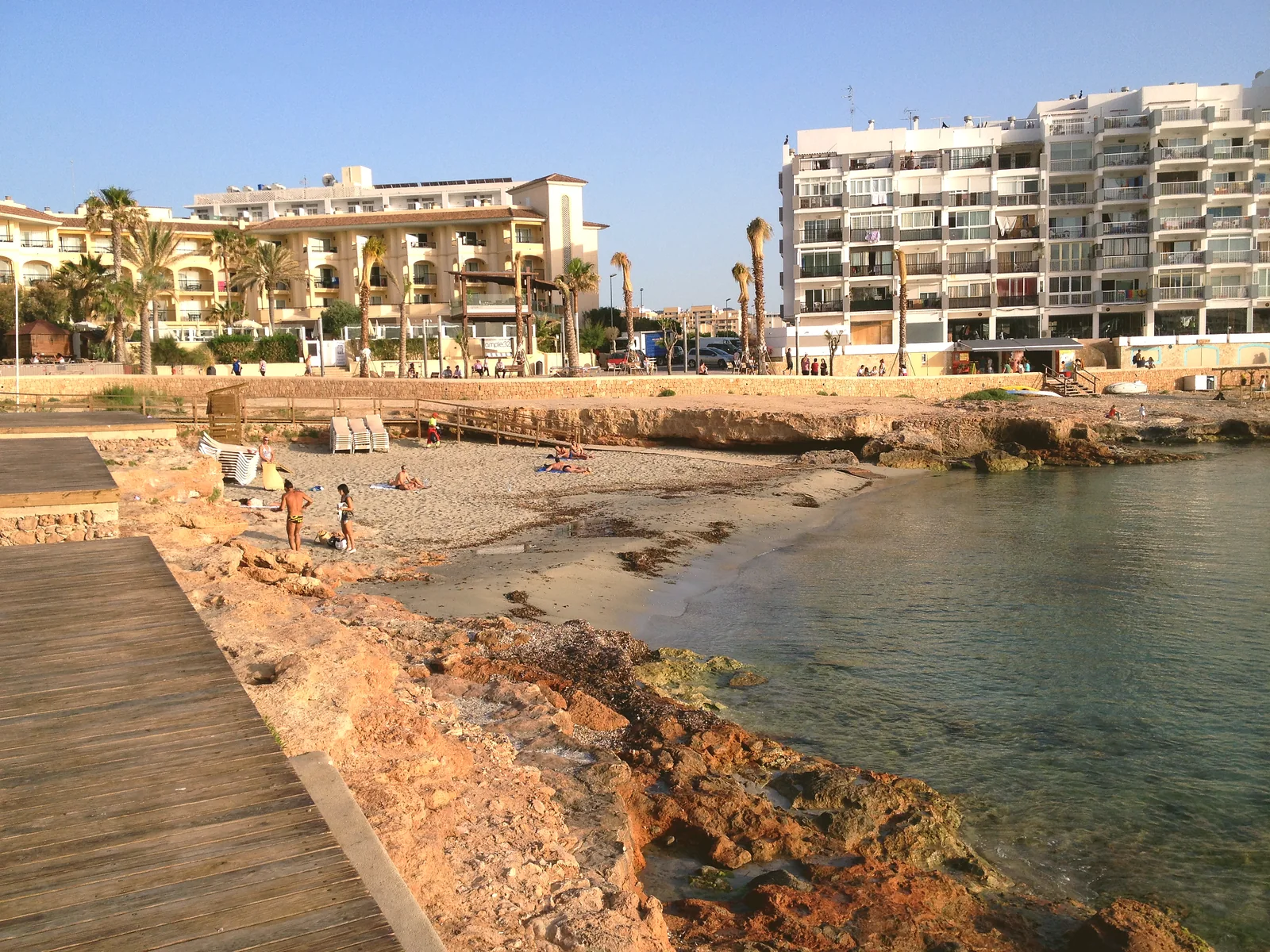
Caló des Moro, Sant Antoni: the small cove on the coastal promenade
A small west-facing cove of fine white sand and rock ledges on the north shore of the Bay of Sant Antoni, with a seafront promenade running past it.
Updated 11 October 2026
- Size
- About 45 m by 30 m
- Faces
- West, sheltered from the wind
- From the centre
- 1 to 2 km, depending on source
- Bus stop
- About 200 m away
Some beaches are destinations. Caló des Moro is more of a stage: a small cove on the northern shore of the Bay of Sant Antoni, between Roca Baixa and the port, with a seafront promenade passing its edge and a wooden boardwalk stepping down to the sand. It sits below the sa Talaia headland, which the tourism board describes as entirely covered by a thick pinewood, and it is surrounded by the tourist buildings of the bay.
A small, steep cove
The Illes Balears tourism site calls the beach quite small, with rocky sides and fine white sand. The sand came from underwater sandbanks and was introduced artificially. Spain's national listing puts the dimensions at 45 metres by 30 metres, with calm water and moderate waves at times.
The slope is the thing to know. Less than 30 metres from the shore the water is already deeper than two metres, over a sandy bottom. Good swimmers will like it; parents of small children will want to stay close. The cove faces west and is sheltered from the wind, and the rock ledges at the sides, which the national listing describes as little coves in their own right, work well for a dip and a mask.
Crowds
Because the cove is small and surrounded by buildings, it is crowded with locals and tourists, and the national listing rates its occupancy as high. In practice that means choosing the hour: the sand is smallest at midday in July and August, and a towel on the rocks is a perfectly ordinary choice.
The promenade, both ways
What makes Caló des Moro useful is where it sits on the seafront path. North along the promenade the route leads to Cala Gració and its neighbour Gracioneta, with views over the bay, and further to the very small Cala Tànit, described as the smallest beach on Ibiza. In a straight line Gració is about 0.9 km away. South, the shore leads to the village and the port of Sant Antoni de Portmany, about one kilometre by the tourism site's figure; other directories give up to two.
The Sant Antoni map shows the route, and the bay page covers the harbour and the bay as a whole.
Services and access
One directory lists walkways, toilets, showers, a cleaning service, food and drink, sports equipment hire and an anchoring area, and the national listing adds watercraft rental, deck chair and sunshade hire and a car park. The tourism board's own page lists no facilities, so what is open on a given day depends on the season.
Access is by following the signs, on foot or by car. The nearest bus stop is about 200 metres away. Parking is free and close, according to the tourism site, but another directory says it is not patrolled and has fewer than 50 spaces, so the walk or the bus is the safer plan on a summer evening.
Fishing and diving
The national listing describes the cove as good for fishing and scuba diving. The rocks and the sandy bottom beyond them draw both, so swimmers should keep clear of anyone fishing from the ledges, and stay out of the anchoring area.
Any season
The tourism board suggests the cove for families, friends and couples in any season. Outside summer the beach is quieter, the rentals and bars may be closed, and the promenade is there for a walk with the pines of the headland above it. The sand and the rocks do not change with the calendar, and a swim in the shoulder months is the argument for a short visit in spring or autumn, when the whole bay is easier to move through.
Visitors who want a sense of the place without a swim can simply walk the stretch between the cove and Cala Gració: it is a seafront path with the bay on one side and a place for a dip at either end.
Questions people ask
How big is Caló des Moro?
Small. Spain's national tourism listing gives about 45 metres by 30 metres, and the Illes Balears tourism site calls it quite small, with rocky sides. The sand is fine and white and was brought in artificially from underwater sandbanks. Occupancy is rated high, so expect it to fill on summer days.
Is the water at Caló des Moro deep?
It shelves quickly. The Illes Balears tourism site says the depth passes two metres less than 30 metres from the shore, over a sandy bottom, so it is not the cove for toddlers in the shallows. The beach faces west and is sheltered from the wind, with calm water and moderate waves at times.
How do you get to Caló des Moro?
By following the signs from Sant Antoni, on foot, by car or by town bus. The nearest bus stop is about 200 metres away. Free parking nearby is mentioned by the tourism site, while another directory says it is not patrolled and holds fewer than 50 spaces. On foot, the promenade links it with the port to the south.
What can you walk to from Caló des Moro?
North along the seafront promenade to the coves of Gració and Gracioneta, and to Cala Tànit, described as the smallest beach on the island. South, the coast leads to the village and port of Sant Antoni de Portmany. The cove sits below the pine-covered sa Talaia headland.
Sources Spain.info – Beach: Caló des Moro · Illes Balears tourism – Cove: Caló des Moro
Nearby on the map
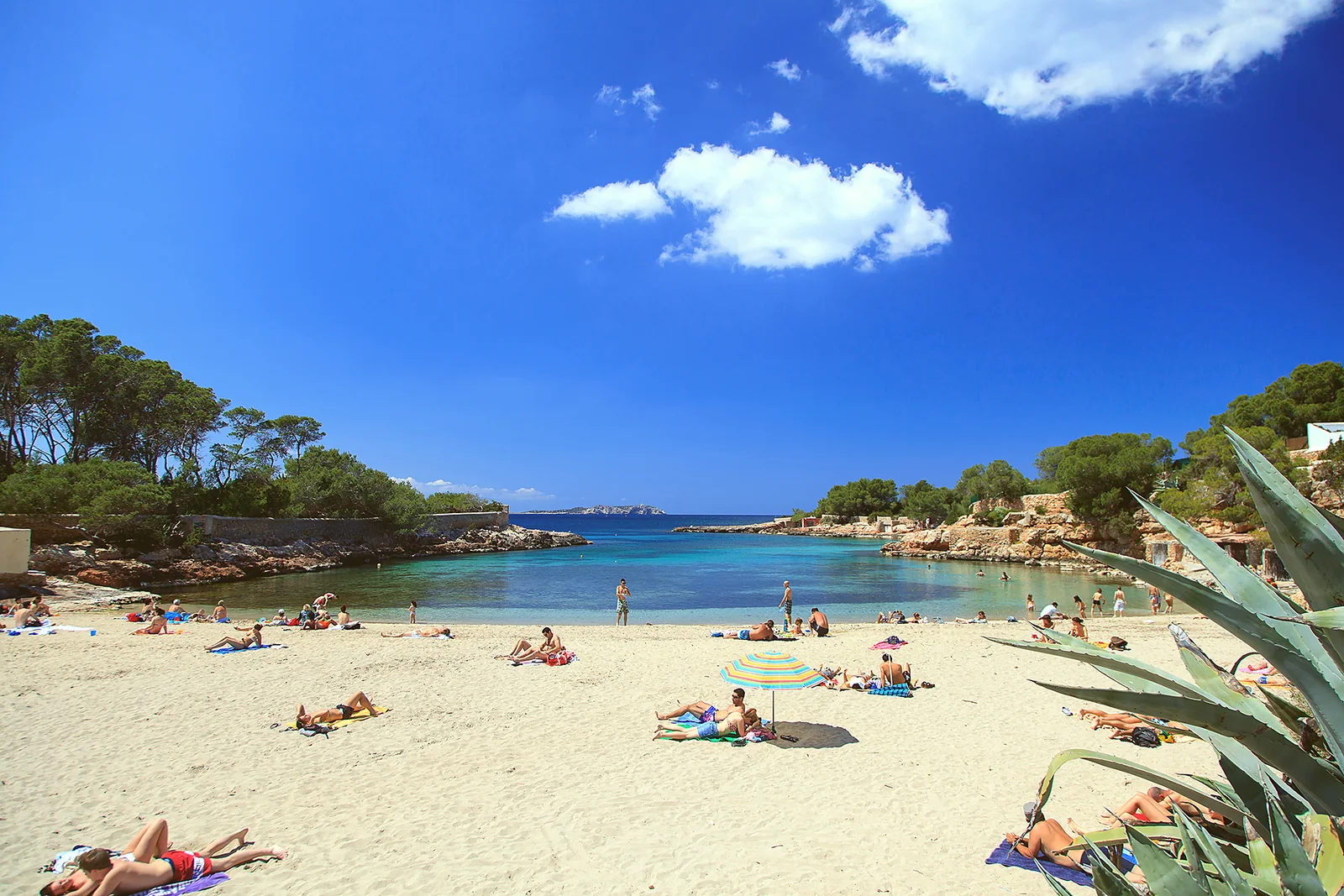
Cala Gració, Ibiza: the walk from Sant Antoni and Gracioneta
A sheltered cove of fine golden sand, calm clear water and pines, about a quarter of an hour on foot from the centre…
Sant Antoni de Portmany · West coastSan Antonio Ibiza map: hotels, the bay and the Sunset Strip
A wide bay facing west, a harbour and promenade at its head, hotel districts along both shores and the coves and…
West coast · Sant Antoni and Sant JosepSan Antonio Bay, Ibiza: a map of the bay, coves and sunset coast
A wide, west-facing bay with the harbour town of Sant Antoni at its head and a string of small coves, rocky points and…